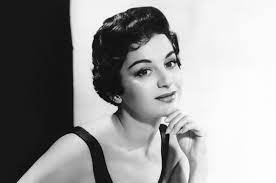
Gogi Grant, the singer who topped the charts in 1956 with her rendition of “The Wayward Wind”, passed away on March 10, 2016 at the age of 91. Her family did not disclose the cause of her death, but she had survived cancer surgery and was in remission
Contents
Early Years and Rise to Fame
Grant was born Myrtle Audrey Arinsberg on September 20, 1924 in Philadelphia, Pennsylvania. She was the eldest of six children of Russian Jewish immigrants When she was 12, she moved with her family to Los Angeles, where she attended Venice High School. She won a teenage singing contest at a Hollywood nightclub and appeared on television talent shows. She worked as a car saleswoman in the early 1950s
She began her recording career under the names Audrey Brown and Audrey Grant, before RCA-Victor Records producer Dave Kapp gave her the name Gogi, which he claimed he dreamed of one night She signed with Era Records in 1955 and had her first top ten hit with “Suddenly There’s a Valley”. The following year, she recorded “The Wayward Wind”, written by Stanley Lebowski and Herb Newman, which became her signature song. It reached number one on the Billboard Hot 100 chart, ending Elvis Presley’s eight-week reign with “Heartbreak Hotel”. It stayed at the top spot for six weeks and sold over a million copies in the US alone. It also peaked at number nine in the UK Singles Chart. Billboard magazine voted her the most popular female vocalist of 1956
Film and Television Appearances
In 1957, Grant lent her voice to actress Ann Blyth, who portrayed torch singer Helen Morgan in a biographical film, The Helen Morgan Story. Grant sang Morgan’s songs in the film, which earned her a return to RCA Victor and a soundtrack album that reached number 25 on the Billboard album chart
In 1958, Grant starred in The Big Beat, a musical film that featured performances by Fats Domino, The Diamonds, The Del-Vikings, The Mills Brothers, George Shearing, and Harry James. She played a recording artist who falls in love with a songwrite
Grant also appeared on various variety shows, such as The Ed Sullivan Show and The Nat King Cole Show. She recorded more than a dozen albums and had other hits such as “The One I Love Belongs to Somebody Else”, “When the Tide Is High”, “Who Are We”, “You’re In Love”, and “The Sea”
Later Years and Retirement
Grant took a hiatus from show business in the late 1960s to raise her family. She had two children with her first husband Robert Rifkind, whom she divorced in 1959. She married her second husband Robert Gore in 1963 and remained with him until his death in 2013
She resumed singing in 1987 and performed into her late 80s. She also re-recorded some of her songs for CD releases. She received a star on the Hollywood Walk of Fame in 2008
She is survived by her daughter Jeri, son Joshua, and granddaughters Tina and Dalia
Conclusion
Gogi Grant was one of the most successful singers of the 1950s, with a distinctive voice and style that captivated audiences. Her song “The Wayward Wind” remains a classic of pop music history. She left behind a legacy of music and memories that will live on for generations to come.
