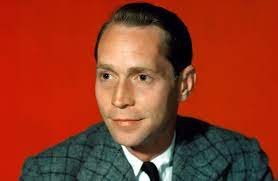
Franchot Tone was a prominent actor, producer, and director who rose to fame in the 1930s and 1940s. He was known for his sophisticated and gentlemanly roles, as well as his turbulent personal life. He was married four times, most famously to actress Joan Crawford, and had a violent brawl with actor Tom Neal over another actress, Barbara Payton. He died of lung cancer in 1968 at the age of 63. Here is a brief overview of his life and career, and how he succumbed to the deadly disease.
Contents
Early Life and Education
Franchot Tone was born on February 27, 1905, in Niagara Falls, New York. He was the youngest son of Dr. Frank Jerome Tone, the wealthy president of the Carborundum Company, and his socially prominent wife, Gertrude Van Vrancken Franchot He had a brother named Frank Jerome Tone Jr.
He was of French Canadian, Irish, and English ancestry. He was also a distant relative of Wolfe Tone, the “father of Irish Republicanism”1 Through his ancestor, the nobleman Gilbert L’Homme de Basque, he was of French Basque descent
He was educated at The Hill School in Pottstown, Pennsylvania, from which he was dismissed. He then entered Cornell University, where he was president of the drama club, acting in productions of Shakespeare He was also elected to the Sphinx Head Society and joined the Alpha Delta Phi fraternity. After graduating in 1927, he gave up the family business to pursue an acting career, moving to Greenwich Village, New York
Broadway and Hollywood Success
Tone started his career in the New York theatre scene in the mid-1920s. He performed in plays like The Belt (1927), Centuries (1927–28), The International (1928), The Age of Innocence (1928–29), Uncle Vanya (1929), Cross Roads (1929), Red Rust (1929–30), Hotel Universe (1930), and Pagan Lady (1930–31). He joined the Theatre Guild and played Curly in their production of Green Grow the Lilacs (1931), where Tone sang, which later became the basis for the musical Oklahoma!
He made his film debut in 1932 with The Wiser Sex, a comedy drama co-starring Claudette Colbert. He then signed a contract with MGM and became one of their leading men. He starred in films like Today We Live (1933) with Joan Crawford, whom he married in 1935; The Lives of a Bengal Lancer (1935) with Gary Cooper; Mutiny on the Bounty (1935) with Clark Gable and Charles Laughton; The Gorgeous Hussy (1936) with Crawford again; Love on the Run (1936) with Crawford and Gable; The Bride Wore Red (1937) with Crawford once more; Three Comrades (1938) with Robert Taylor and Margaret Sullavan; Man-Proof (1938) with Myrna Loy; Three Loves Has Nancy (1938) with Janet Gaynor; The Girl Downstairs (1938) with Franciska Gaal; Fast and Loose (1939) with Rosalind Russell; Dark Waters (1944) with Merle Oberon; Phantom Lady (1944) with Ella Raines; Lost Honeymoon (1947) with Ann Richards; Every Girl Should Be Married (1948) with Cary Grant and Betsy Drake; Without Honor (1949) with Laraine Day; Here Comes the Groom (1951) with Bing Crosby and Jane Wyman; Advise & Consent (1962) with Henry Fonda and Charles Laughton; and Mickey One (1965) with Warren Beatty
He also appeared on radio shows like Lux Radio Theatre, Suspense, Screen Guild Theater, Cavalcade of America, The Ford Theatre Hour, and The Screen Director’s Playhouse. He made his television debut in 1950 on Repertory Theatre. He then guest starred on several TV series like Studio One, Kraft Television Theatre, Climax!, Playhouse 90, Alfred Hitchcock Presents, The Twilight Zone, Route 66, Bonanza, The Alfred Hitchcock Hour, Ben Casey, The Virginian, Combat!, The Fugitive, Ironside, Run for Your Life, and The Name of the Game
He also continued to work on stage throughout his career. Some of his notable Broadway plays were Uncle Harry (1942), Hope for a Harvest (1944), Strange Interlude (1951), The Autumn Garden (1951), The Moon Is Blue (1953), A Moon for the Misbegotten (1957), and A Far Country (1961). He also directed and produced some plays, such as The Fifth Season (1955), The Time of Your Life (1958), and The Night of the Iguana (1962)
Personal Life and Controversies
Tone was married four times and had two sons. His first wife was Joan Crawford, whom he married in 1935 and divorced in 1939. They remained friends and co-starred in several films after their divorce. His second wife was Jean Wallace, whom he married in 1941 and divorced in 1948. They had a son named Pascal Franchot Tone. His third wife was Barbara Payton, whom he married in 1951 and divorced in 1952. They had a tumultuous relationship that involved a violent fight with actor Tom Neal, who was also involved with Payton. Tone suffered severe facial injuries that required plastic surgery and left him with scars. His fourth wife was Dolores Dorn, whom he married in 1956 and divorced in 1959. They had a son named Thomas Jefferson Tone
Tone was also romantically linked to actresses like Bette Davis, Gloria Vanderbilt, Jean Harlow, Loretta Young, Ginger Rogers, Judy Garland, Paulette Goddard, Olivia de Havilland, and Anita Ekberg
Tone was a chain smoker and developed lung cancer in the late 1960s. He underwent surgery to remove part of his right lung in 1967, but the cancer had spread to his other lung and his brain. He died on September 18, 1968, in New York City. He was cremated and his ashes were scattered at his farm in Bedford, New York
Legacy and Honors
Tone was nominated for an Academy Award for Best Actor for his role as Midshipman Roger Byam in Mutiny on the Bounty (1935), along with his co-stars Clark Gable and Charles Laughton, making it the only film to have three simultaneous Best Actor nominations, and leading to the creation of the Best Supporting Actor category. He also won a Tony Award for Best Direction of a Play for The Time of Your Life (1958). He received a star on the Hollywood Walk of Fame in 1960 for his contribution to cinema
He is remembered as one of the most versatile and talented actors of his generation, who excelled in various genres and mediums. He is also regarded as one of the most handsome and charming leading men of Hollywood’s golden age. His films are still popular among classic movie fans and critics alike.
Franchot Tone cause of death was lung cancer, but his legacy lives on through his films, TV shows, plays, and radio programs. He was a true star who left an indelible mark on the entertainment industry.
