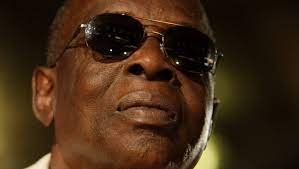
Deacon Jones was one of the most dominant and influential defensive players in NFL history. He was a member of the famed “Fearsome Foursome” defensive line of the Los Angeles Rams, and he coined the term “sack” to describe his specialty of bringing down quarterbacks. He was inducted into the Pro Football Hall of Fame in 1980, and he was named the “defensive end of the century” by Sports Illustrated in 1999. He was also a vocal advocate for civil rights and social justice, and he founded the Deacon Jones Foundation to help young people achieve their potential.
But behind his impressive achievements and legacy, Jones also faced a formidable enemy: lung cancer. He was diagnosed with the disease in 2012, and he succumbed to it on June 3, 2013, at his home in Anaheim Hills, California. He was 74 years old.
The Diagnosis and Treatment
According to NFL.com, Jones first learned that he had lung cancer in November 2012, after he underwent a routine physical examination. He had no symptoms or signs of the disease, and he was shocked by the news. He decided to keep his condition private, and he only told his close family and friends.
Jones underwent chemotherapy and radiation treatments to fight the cancer, but they were not effective. He also tried alternative therapies, such as acupuncture and herbal remedies, but they did not help either. He refused to give up hope, however, and he maintained a positive attitude throughout his ordeal.
The Final Days
Jones spent his final days at his home, surrounded by his loved ones. He was visited by some of his former teammates and friends from the NFL, such as Merlin Olsen, Rosey Grier, Jack Youngblood, and Roger Goodell. He also received messages of support and admiration from fans and admirers around the world.
Jones died peacefully in his sleep on June 3, 2013. His wife, Elizabeth Jones, announced his death to the public the next day. She said that he died of natural causes, without mentioning his cancer. She also said that he was “the most amazing man I have ever known.”
The Legacy and Impact
Jones left behind a remarkable legacy and impact on the game of football and beyond. He revolutionized the position of defensive end with his speed, strength, agility, and technique. He recorded 173.5 sacks in his career, although the statistic was not officially kept until 1982. He also had 22 fumble recoveries, two interceptions, and two safeties. He was a two-time NFL Defensive Player of the Year (1967 and 1968), an eight-time Pro Bowler (1964-1970 and 1972), a five-time First-team All-Pro (1965-1969), and a three-time Second-team All-Pro (1964, 1970, and 1972). He was a member of the NFL 1960s All-Decade Team, the NFL 75th Anniversary All-Time Team, and the NFL 100th Anniversary All-Time Team. He had his number 75 retired by the Rams.
Jones also used his fame and influence to promote social causes that he cared about. He was an outspoken supporter of civil rights and racial equality, and he participated in several protests and marches during the 1960s. He also founded the Deacon Jones Foundation in 1997 to provide scholarships, mentoring, and leadership programs for young people from disadvantaged backgrounds. He was honored with several awards for his humanitarian work, such as the Walter Camp Man of the Year Award in 1989, the Whitney M. Young Jr. Award in 1996, and the NCAA Silver Anniversary Award in 2006.
Jones will always be remembered as one of the greatest players and personalities in NFL history. His legacy will live on through his foundation, his family, his fans, and his fellow Hall of Famers. As Roger Goodell said in his statement after Jones’ death: “He was an icon among icons … Deacon Jones will be missed but always remembered.”
