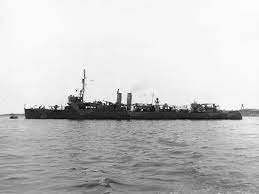
Charles Jackson French was a U.S. Navy sailor who performed a remarkable feat of courage and endurance during World War II. He saved 15 of his shipmates from drowning or being captured by the Japanese after their ship was sunk in the Pacific. He was hailed as the “hero of the Solomons” and the “human tugboat” by the media and the public. However, his life after the war was marred by alcoholism and depression, which eventually led to his premature death at the age of 37. What caused this tragic downfall of a brave and noble man? This article will explore the possible factors that contributed to Charles Jackson French’s cause of death.
Contents
Early Life and Military Service
Charles Jackson French was born on September 25, 1919, in Foreman, Arkansas. He was an orphan who lived with his older sister, Viola, in Omaha, Nebraska. He learned to swim in the Red River at the age of eight, which would prove to be a vital skill later in his life.
He enlisted in the U.S. Navy in 1937 and served four years. He received an honorable discharge on November 11, 1941, but re-enlisted after the attack on Pearl Harbor. He was assigned to the mess (kitchen) as an attendant, one of the few occupations open to African American men in the navy at that time.
He was stationed on board the USS Gregory, a destroyer training ship, which was deployed to the Solomon Islands in 1942. On the night of September 5, 1942, the Gregory was attacked and sunk by Japanese naval forces near Guadalcanal. French managed to escape from the sinking ship and helped 15 wounded survivors into a life raft.
The Heroic Rescue
Fearing that the raft would drift toward the shore where Japanese troops were located, French decided to tow the raft away from danger. He tied a line to himself and swam for more than six hours in shark-infested water, pulling the raft with his bare hands. He endured fatigue, hunger, thirst, and enemy fire until he reached a friendly island where he and his companions were rescued by marines in a navy landing craft.
His heroic act was witnessed and reported by Ensign Robert N. Adrian, the only officer from the bridge of the Gregory to survive. He told an Associated Press reporter about French’s rescue and also recounted it on a radio program called “It Happened in the Service”. He also recommended French for the Navy Cross, the second-highest military decoration for valor.
However, French did not receive the medal he deserved. Instead, he received only a letter of commendation from Admiral William F. Halsey Jr., then commander of the South Pacific Fleet. The commendation stated:
For meritorious conduct in action while serving on board of a destroyer transport which was badly damaged during the engagement with Japanese forces in the British Solomon Islands on September 5, 1942. After the engagement, a group of about fifteen men was adrift on a raft, which was being deliberately shelled by Japanese naval forces. French tied a line to himself and swam for more than two hours without rest, thus attempting to tow the raft. His conduct was in keeping with the highest traditions of the Naval Service.
Many believe that French was denied a higher award because of racial discrimination and prejudice that prevailed in the navy at that time.
The Post-War Struggle
French became a national hero after his rescue story was publicized. He was celebrated in the black press and was even featured on a comic strip and a trading card. He made public appearances and attended events such as a football game at Creighton University with his sister in 1942.
However, his fame did not last long. After his military service, he married and had one daughter. He suffered from alcoholism and depression, likely caused by post-traumatic stress disorder (PTSD) from his war experiences. He died on November 7, 1956, in San Diego, California; he was only 37 years old. He was buried at Fort Rosecrans National Cemetery in San Diego.
His sister Viola was his only surviving relative at that time.
The Legacy and Recognition
For decades, French’s heroism was largely forgotten or overlooked by history. However, in recent years, there has been renewed interest and effort to honor him more appropriately.
In 2022, French was posthumously awarded the Navy and Marine Corps Medal for heroic actions not involving direct contact with an armed enemy. The award was presented on May 21, 2022, at Naval Base San Diego, at a ceremony in which the base’s rescue swimmer training pool was dedicated in French’s honor.
In June 2022, President Joe Biden signed into law H.R. 4168, to designate the United States Postal Service facility located at 6223 Maple Street, in Omaha, Nebraska, as the Petty Officer 1st Class Charles Jackson French Post Office.
In addition, some have petitioned the navy to consider French for a posthumous Medal of Honor, the highest military award for valor.
Charles Jackson French was a man who risked his life to save others, without regard for his own safety or recognition. He was a true hero who deserves to be remembered and honored for his courage and sacrifice. His cause of death was not only physical, but also psychological and social. He was a victim of war, racism, and neglect. His story is a reminder of the human cost of war and the need for justice and compassion for all.
