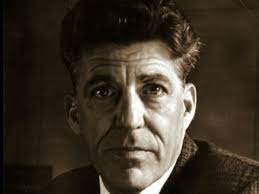
Billy Halop was a famous American actor who rose to fame as one of the original Dead End Kids, a group of juvenile delinquents who appeared in several movies in the late 1930s and early 1940s. He also had a successful career on radio, stage, and television, most notably as Bert Munson, the cab driver and friend of Archie Bunker on All in the Family. But behind his fame and talent, Halop struggled with personal problems, such as alcoholism, marital issues, and financial troubles. He died of a heart attack on November 9, 1976, at the age of 56. What led to his premature death and what legacy did he leave behind? Here is a brief overview of his life and career.
Contents
Early Life and Career
Billy Halop was born on February 11, 1920, in Jamaica, Queens, New York City. He came from a theatrical family; his mother was a dancer and his sister, Florence Halop, was an actress who worked on radio and television. He also had a younger brother, Joel Tucker Halop. Halop started his show business career on radio in the 1920s and starred in several radio shows, such as The H-Bar-O Rangers and Home Sweet Home. He also attended the Professional Children’s School in New York.
In 1935, he was cast as Tommy Gordon, the leader of a gang of slum kids, in the Broadway play Dead End by Sidney Kingsley. The play was a huge success and attracted the attention of Hollywood producer Samuel Goldwyn, who bought the rights to make a film version. In 1937, Halop and some of the other teenage cast members were brought to Hollywood to reprise their roles in the movie Dead End, which also starred Humphrey Bogart and Joel McCrea. The film was a hit and launched the careers of Halop and his co-stars, who became known as the Dead End Kids.
The Dead End Kids and Beyond
The Dead End Kids were a popular phenomenon in Hollywood and appeared in several films as a group or in various subgroups, such as the Little Tough Guys, the East Side Kids, and the Bowery Boys. Halop usually played the leader or second-in-command of the gang, often named Tommy or Soapy. He worked with some of the biggest stars of the time, such as James Cagney, John Garfield, Pat O’Brien, Ronald Reagan, and Errol Flynn. Some of his notable films with the Dead End Kids include Angels with Dirty Faces (1938), Crime School (1938), They Made Me a Criminal (1939), Dust Be My Destiny (1939), and Tom Brown’s School Days (1940).
Halop left the group in the early 1940s to pursue a solo career, but he found it difficult to break away from his typecast image as a juvenile delinquent. He also faced competition from other young actors who were rising to stardom during World War II, such as Mickey Rooney, Van Johnson, and Robert Walker. He served in the US Army Signal Corps during the war and returned to Hollywood afterwards, but he could only land parts in B movies or low-budget productions. He also tried to revive his career on stage and radio, but with little success.
Personal Problems and Later Career
Halop’s personal life was also troubled by various issues. He was married at least four times, according to interviews he gave near the end of his life. His first wife was Helen Tupper, whom he married in 1946 and divorced in 1947. His second wife was Barbara Hoon, whom he married in 1948 and divorced in 1958. His third wife was Suzanne Roe, whom he married in 1960 and divorced in 1967. Roe was a multiple sclerosis victim and Halop learned nursing skills to take care of her. His fourth wife was a nurse coworker whom he married briefly before getting an annulment.
Halop also struggled with alcoholism for most of his adult life. He once said that he drank because he was unhappy with his career and felt that he had wasted his potential. He also had financial problems due to his lack of steady work and his alimony payments to his ex-wives. He worked as an electric dryer salesman for a while in the mid-1950s and was named “Most Creative Salesman in the U.S.” by the National Association of Manufacturers.
In the 1970s, Halop enjoyed a career resurgence when he was cast as Bert Munson, the owner of Munson’s Cab Company where Archie Bunker worked part time, on the hit sitcom All in the Family. He appeared in 10 episodes from 1971 to 1975 and received positive reviews for his performance. He also had guest roles on other TV shows, such as The Odd Couple, The Partridge Family, and The Streets of San Francisco.
Death and Legacy
Halop suffered two heart attacks in the fall of 1971 and underwent open-heart surgery. He recovered and continued to work, but his health was fragile. On November 9, 1976, he died of another heart attack at his home in Brentwood, Los Angeles. He was 56 years old. He was buried at Mount Sinai Memorial Park Cemetery.
Halop left behind a legacy as one of the most talented and charismatic actors of his generation. He was praised for his natural and realistic acting style, his expressive voice, and his ability to convey emotion and humor. He was also admired for his courage and resilience in overcoming his personal challenges and finding happiness in his later years. He is remembered as one of the original Dead End Kids, who influenced generations of actors and filmmakers with their portrayal of urban youth and social issues. He is also fondly remembered by fans of All in the Family, who enjoyed his chemistry with Carroll O’Connor and his portrayal of a loyal and compassionate friend.
Billy Halop’s cause of death was a tragic end to a remarkable life and career. He was a star who shone brightly but briefly, a kid who never grew old, and a man who never gave up. He was Billy Halop, the Dead End Kid.
