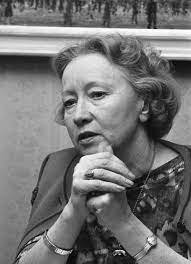
Galina Ulanova was one of the most celebrated ballerinas of the 20th century, who dazzled audiences with her grace, expressiveness, and technical mastery. She was the prima ballerina assoluta of the Bolshoi Theatre for 16 years, and performed many of the classic roles in ballet, such as Giselle, Swan Lake, Cinderella, and Romeo and Juliet. She was also a revered teacher and mentor, who inspired generations of Russian dancers. But how did this remarkable woman die, and what legacy did she leave behind?
A Long Illness
According to BBC News, Galina Ulanova died in Moscow’s Central Clinic Hospital on April 25, 1998, after a long illness. The exact nature and cause of her illness were not disclosed, but a spokeswoman for the Bolshoi said that she had been suffering for a long time. She was 88 years old at the time of her death.
Ulanova had retired from the stage in 1960, when she was 50 years old, but she remained active and influential in the ballet world until the end of her life. She was the artistic director of the Bolshoi Ballet School, where she coached many young dancers, including Maya Plisetskaya, Natalia Bessmertnova, and Ekaterina Maximova. She also served as a judge at international ballet competitions, and received many honors and awards for her contributions to the art of dance.
A National Treasure
Galina Ulanova was born in St. Petersburg in 1910, to a family of professional dancers. Her father was a choreographer and her mother was a performer and ballet teacher. She studied at the Leningrad School of Choreography, where she was trained by Agrippina Vaganova, one of the founders of the Russian ballet technique. She joined the Kirov Ballet (then known as the Mariinsky Theatre) in 1928, and quickly rose to fame as a soloist.
In 1944, she was transferred to the Bolshoi Theatre in Moscow, by the order of Joseph Stalin, who was impressed by her talent and wanted her to represent the Soviet Union on the world stage. She helped establish the Bolshoi as Russia’s premier ballet company, and premiered many new works, such as Sergei Prokofiev’s Cinderella in 1945. She also toured abroad, and received rave reviews from critics and audiences alike. She was especially admired for her portrayal of Juliet in Prokofiev’s Romeo and Juliet, which she performed in London in 1956.
Ulanova was regarded as a national treasure and a cultural icon in the Soviet Union. She was awarded the Order of Lenin, the highest civilian honor, four times, and was twice named a Hero of Socialist Labour, the highest state honor. She was also given the Stalin Prize, the Lenin Prize, and the People’s Artist of the USSR title, among other accolades. She was elected a Foreign Honorary Member of the American Academy of Arts and Sciences in 1960, and received the Presidential Prize for Contributions in the Field of Culture and Art in 1997.
A Lasting Legacy
Galina Ulanova’s death was mourned by the entire ballet community, and by millions of fans around the world. She was buried in the cemetery of the Novodevichy Convent in Moscow, a resting place for many prominent figures in Russian history and culture. Her apartment in one of Moscow’s Seven Sisters skyscrapers, the Kotelnicheskaya Embankment Building, was preserved as a memorial museum. Monuments to Ulanova were erected in St. Petersburg and Stockholm.
Ulanova’s legacy lives on in the ballets that she performed, the dancers that she taught, and the admirers that she inspired. She is widely regarded as one of the greatest ballerinas of all time, and as a symbol of the beauty and power of ballet. As the Encyclopedia Britannica states, “Ulanova’s dancing was marked by poetry, lyricism, and a delicate technique that seemed to transcend the physical limitations of the human body.”
Galina Ulanova cause of death may have been the result of a long illness, but her spirit and artistry will never die. She will always be remembered as a legend of ballet, and as a shining star of Russian culture.
