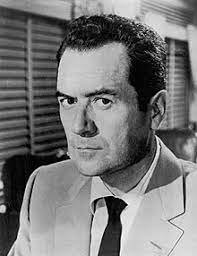
Frank Lovejoy was a popular American actor who appeared in radio, film, and television from the late 1930s to the early 1960s. He was known for his roles as detectives, reporters, soldiers, and other tough but honest characters. He starred in several film noir classics, such as The Hitch-Hiker and Try and Get Me, as well as war movies, westerns, and dramas. He also had his own TV shows, Man Against Crime and Meet McGraw, and was a frequent guest star on other programs. He died of a heart attack at the age of 50 in 1962, leaving behind a legacy of memorable performances and a loyal fan base. In this article, we will explore the Frank Lovejoy cause of death, as well as his life and career highlights.
Contents
Early Life and Radio Career
Frank Lovejoy was born Frank Andrew Lovejoy Jr. on March 28, 1912, in the Bronx, New York. His father was a furniture salesman from Maine, and his mother was of Irish descent. He grew up in New Jersey and attended St. Peter’s Prep School in Jersey City. He worked on Wall Street as a teenager, but lost his job after the stock market crash of 1929. He then turned to acting, joining touring companies and making his Broadway debut in 1934. He married actress Joan Banks in 1940, and they had two children, Judy and Stephen.
Lovejoy’s distinctive voice, which was described as “gritty, authoritative, and no-nonsense”, was perfect for radio. He became a successful radio actor, playing various roles in crime dramas, soap operas, comedies, and anthologies. He was best known for his portrayal of Broadway Harry on the Gay Nineties Revue, a detective on Gang Busters, a narrator on This Is Your FBI, and the title character on Night Beat, a newspaper drama. He also appeared on The Whistler, Suspense, The Amazing Mr. Malone, and many other shows.
Film Career
Lovejoy made his film debut in 1948, in the comedy-drama One Sunday Afternoon. He quickly established himself as a reliable supporting actor, often playing second or third leads. He worked with some of the biggest stars and directors of the time, such as Joan Crawford, James Stewart, Ida Lupino, Stanley Kramer, and Nicholas Ray. He was especially effective in film noir, a genre that suited his tough but sympathetic persona. Some of his notable film noir roles include:
A war veteran suffering from racism and PTSD in Home of the Brave (1949)
A journalist who falls into a life of crime and violence in Try and Get Me (1950)
A hitchhiker who is kidnapped by a psychotic killer in The Hitch-Hiker (1953)
A screenwriter who is suspected of murder in In a Lonely Place (1950)
Lovejoy also appeared in several war movies, such as Breakthrough (1950), Retreat, Hell! (1952), Beachhead (1954), and Strategic Air Command (1955). He played soldiers, pilots, and commanders, often showing courage and leadership in the face of danger. He also ventured into westerns, such as The Charge at Feather River (1953), The Last Outpost (1951), and The Crooked Way (1949). He also starred in dramas, such as Goodbye, My Fancy (1951), Three Secrets (1950), and The System (1953).
Television Career
Lovejoy was one of the first film actors to embrace television, seeing it as a new and exciting medium. He starred in two short-lived TV series, Man Against Crime (1956-1957) and Meet McGraw (1957-1958), both of which featured him as a private detective. He also guest-starred on numerous TV shows, such as The Twilight Zone, Alfred Hitchcock Presents, Maverick, and The Untouchables. He was praised for his versatility and professionalism, and was well-liked by his co-stars and directors.
Frank Lovejoy Cause of Death
Lovejoy’s career was cut short by his sudden and unexpected death on October 2, 1962. He was staying at the Hotel Warwick in New York City, where he was starring in Gore Vidal’s play The Best Man at the Playhouse on the Mall in Bergen, New Jersey. He suffered a heart attack during the early morning hours, and was found by his wife, Joan. He was rushed to the hospital, but was pronounced dead on arrival. He was 50 years old.
Lovejoy’s death shocked and saddened his fans, friends, and colleagues. He was interred at Holy Cross Cemetery in Culver City, California. His widow, Joan, died in 1998, and his son, Stephen, died in 2015. His daughter, Judy, is still alive and has a website dedicated to her father’s memory.
Legacy and Influence
Frank Lovejoy was one of the most versatile and underrated actors of his generation. He had a natural and realistic style, and could play a wide range of characters, from heroes to villains, from comedy to drama. He was admired for his honesty, integrity, and professionalism, and was respected by his peers and critics. He left behind a rich and diverse body of work, which can still be enjoyed by modern audiences. He influenced many actors who followed him, such as Clint Eastwood, Steve McQueen, and Robert Mitchum.
Frank Lovejoy cause of death was a tragic loss for the entertainment industry, but his legacy lives on. He was a true star, who brought life and depth to every role he played. He was, as one of his fans wrote, “a man’s man, and a woman’s dream”. He was Frank Lovejoy, and he will always be remembered.
