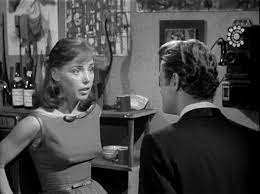
Barboura Morris was an American actress and writer who appeared in many low-budget movies, mostly produced by Roger Corman and American International Pictures. She is best remembered for her roles in cult classics such as Sorority Girl, The Wasp Woman, and A Bucket of Blood. But what was the cause of her death, and why is there so little information about her life?
Early Years and Career
Barboura Morris was born Barboura O’Neill on October 22, 1932, in Los Angeles. She graduated from UCLA, where she won the Best Actress awards two times. Shortly after, she joined the Stumptown Players, a 16-person stock theater company in Guerneville, composed of fellow California university undergraduates and alumni.
One of her fellow Stumptown players was Roger Corman, who later became a prolific and influential filmmaker, known for his low-budget and fast-paced productions. Corman gave Morris a leading role in his 1957 film Sorority Girl, which marked the beginning of a long collaboration between the two. Morris appeared in many other movies for Corman, such as Machine-Gun Kelly (1958), opposite Charles Bronson, The Wasp Woman (1959), as the faithful secretary to the title character, and A Bucket of Blood (1959), as the love interest of a murderous artist. Morris was often involved in Corman’s work with American International Pictures, a studio that specialized in cheap and sensational films for the youth market.
Morris also had some television credits, such as a 1956 episode of The Man Called X and a 1959 episode of The Thin Man.Her final film role was as Anne Sullivan in Helen Keller and Her Teacher, a 1970 dramatization of Keller’s life.
Writing and Activism
In addition to acting, Morris was also a writer and an activist, aligned with the New Left movement. She published under the name Barboura Morris Freed, after marrying playwright Donald Freed in 1965. The couple had one son and collaborated on several projects.
One of Morris’ most controversial writings was an essay titled “Flight 553: the Watergate Murder”, which was included in Steve Weissman’s 1974 book Big Brother and the Holding Company: the world behind Watergate. In the essay, Morris implicated Richard Nixon in the death of Dorothy Hunt, the wife of Watergate burglar E. Howard Hunt, who died in the United Airlines Flight 533 plane crash in 1972. Morris claimed that Hunt was carrying documents that could expose Nixon’s involvement in various crimes, and that the plane was sabotaged by the CIA. Historian David Greenberg characterizes Morris’ claims as one of the New Left conspiracy theories surrounding Nixon following Watergate.
The essay was planned as part of a full book to be called The Watergate Women, written by Morris and edited by Freed. However, the book was never completed or published.
Death and Legacy
Morris died in Santa Monica, one day after her 43rd birthday, on October 23, 1975. She had been battling cancer, but died from a stroke. She was buried in Woodlawn Memorial Cemetery.
Morris’ death was largely unnoticed by the mainstream media, and little is known about her personal life and relationships. She was married twice, first to Monte Hellman, a producer of experimental theater who led the Stumptown company, from 1954 to 1958, and then to Donald Freed, from 1965 until her death. She also had a brief romantic involvement with Roger Corman during the production of A Bucket of Blood.
Morris’ filmography is mostly composed of low-budget and obscure films, which have gained a cult following over the years. She is regarded as one of the most talented and versatile actresses of the B-movie genre, and as a muse and collaborator of Roger Corman. Her roles often showcased her intelligence, wit, and charm, as well as her ability to play a wide range of characters, from innocent to seductive, from comedic to dramatic.
Morris’ writing and activism reflect her political and social awareness, as well as her courage and creativity. She was one of the few women who dared to challenge the Nixon administration and expose its corruption and crimes. She was also one of the pioneers of the New Left movement, which advocated for radical change and social justice.
Barboura Morris cause of death may have been a stroke, but her life was a mystery. She was a low-budget actress who left a lasting impression on the film industry and the political scene. She was a woman who lived and died on her own terms, and who deserves to be remembered and celebrated.
