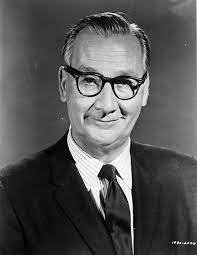
Edward Andrews was a prolific and versatile American actor who appeared in hundreds of stage, film and television productions from the 1930s to the 1980s. He was known for his distinctive white hair, horn-rimmed glasses and imposing build, which often led him to play authoritative and officious characters. He was also adept at comedy and drama, and could portray both amiable and villainous roles with equal skill. He worked with some of the biggest stars of his time, such as Doris Day, Rock Hudson, James Garner, Paul Newman, Burt Lancaster and Elvis Presley. He was a familiar and beloved face to millions of viewers, but his life and career came to an abrupt end in 1985. How did Edward Andrews die? Here is the story of his final days and the cause of his death.
Contents
Early Life and Career
Edward Andrews was born on October 9, 1914, in Griffin, Georgia, the son of an Episcopal priest. He grew up in Pittsburgh, Pennsylvania, Cleveland, Ohio and Wheeling, West Virginia. He developed an interest in acting at an early age, and won a walk-on role in a stock theater production featuring James Gleason when he was 12. He attended the University of Virginia, and made his stage debut in 1935. He moved to Broadway that same year, and appeared in several plays, including So Proudly We Hail, in which he played the lead role opposite Richard Cromwell.
He made his film debut in 1936, in a short comedy called Rushin’ Art. He continued to work in both theater and film, but his film career was interrupted by World War II, during which he served in the U.S. Army Air Forces. He resumed his film career in 1949, with a brief, uncredited appearance in Adam’s Rib, starring Spencer Tracy and Katharine Hepburn. He then landed a series of supporting roles in films such as The Harder They Fall, These Wilder Years, Tea and Sympathy, The Phenix City Story, The Young Savages, The Absent-Minded Professor, Son of Flubber, Elmer Gantry, Advise & Consent, The Thrill of It All, Send Me No Flowers, The Glass Bottom Boat and The Trouble with Girls.
Television Stardom and Personal Life
Edward Andrews also became a popular and frequent guest star on television, appearing in shows such as The Twilight Zone, Alfred Hitchcock Presents, Perry Mason, The Andy Griffith Show, The Dick Van Dyke Show, Bewitched, The Fugitive, The Man from U.N.C.L.E., The Wild Wild West, Hogan’s Heroes, The Brady Bunch, The Love Boat, Fantasy Island and many more. He also starred in several TV movies and miniseries, such as The Bastard, The Rebels, The Seekers, The French Atlantic Affair and The Day After.
In his personal life, Edward Andrews married his high school sweetheart, Emily Barnes, in 1935. They had four children together, but divorced in 1968, after Andrews came out as gay. He later had a long-term relationship with Jeffrey Sterling, a younger man he met through a pen pal program for prison inmates. Andrews was known to be generous and supportive of his friends and family, and was active in various charitable causes.
Final Days and Cause of Death
On March 8, 1985, Edward Andrews suffered a heart attack at his home in Pacific Palisades, California. He was transported to Santa Monica Hospital, where he died later that day. He was 70 years old. A memorial service was held at St. Matthew’s Episcopal Church in Pacific Palisades on March 11. Andrews was later cremated, and his ashes were scattered in the Pacific Ocean.
Edward Andrews left behind a legacy of memorable performances and a loyal fan base. He was praised by critics and colleagues for his professionalism and versatility. He was also remembered for his kindness and generosity. He was one of the most recognizable and beloved character actors of his time, and his death was a loss to the entertainment industry and the public. According to Wikipedia, his cause of death was myocardial infarction, or a heart attack.
