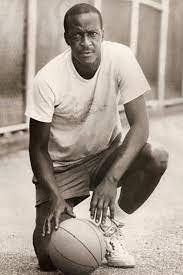
Earl Manigault was a basketball phenom who dazzled crowds with his amazing skills and athleticism. He was nicknamed “The Goat” or “The Lip” and was widely regarded as one of the greatest players to never play in the NBA. However, his life was cut short by a heart attack at the age of 53, after years of struggling with drug addiction and legal troubles. What was the cause of his death and what led to his downfall? Here is a brief overview of his life and legacy.
Contents
Early Years and Rise to Fame
Earl Manigault was born on September 7, 1944, in Charleston, South Carolina. He was raised by a foster mother, Mary Manigault, who moved him to Harlem, New York, when he was seven years old. He developed a passion for basketball and practiced constantly, honing his skills and agility. He attended Benjamin Franklin High School, where he averaged 24 points and 11 rebounds per game and set a city record by scoring 57 points in a junior high school game. He was a star on the court and attracted the attention of college recruiters from Duke, Indiana, and North Carolina. However, he also started using drugs and skipping classes, which led to his expulsion from school. He finished high school at a private academy, Laurinburg Institute, in North Carolina, where he averaged 31 points and 13 rebounds per game. He enrolled in Johnson C. Smith University, a historically black college, but left after one semester due to academic and personal problems.
Manigault returned to Harlem, where he became a legend on the playgrounds. He was known for his incredible leaping ability, which allowed him to perform spectacular dunks and shots. He could reportedly place a quarter on the top of a backboard, dunk the ball with one hand and catch it with the other before dunking it again, and jump over shorter players. He played against some of the best players of his era, such as Kareem Abdul-Jabbar, Connie Hawkins, and Earl Monroe, and earned their respect and admiration. Abdul-Jabbar called him “the best player his size in the history of New York City”. Manigault dominated the 98th Street courts, which became known as “Goat Park” in his honor. He was also mentored by Holcombe Rucker, the founder of the famous Rucker Park tournament.
Drug Addiction and Legal Troubles
Despite his talent and potential, Manigault never made it to the NBA. His drug addiction, which started with marijuana and escalated to heroin, took a toll on his health and performance. He became involved in crime and violence, and was arrested several times for drug possession and robbery. He served 16 months in jail from 1969 to 1970, and another two years from 1977 to 1979. He tried to make a comeback in basketball, but failed to impress in a tryout with the Utah Stars of the American Basketball Association in 1971. He also played in minor leagues and overseas, but never reached the level of success he had in his youth.
Manigault’s drug habit also affected his personal life. He married a woman named Janice, who was also a heroin addict, and had two sons, Earl Jr. and Marco. He was unable to provide for his family and often neglected them. He also contracted hepatitis C from sharing needles, which damaged his liver and weakened his immune system.
Redemption and Death
In the 1980s, Manigault managed to overcome his addiction and became a community activist. He worked at a recreation and counseling center for teens, where he taught them basketball and life skills. He also became an unofficial coach at Wadleigh High School, leading them to a city championship in 1998. He was featured in several documentaries and books about basketball and street culture, and his life story was made into a 1996 HBO movie called Rebound: The Legend of Earl “The Goat” Manigault, starring Don Cheadle.
However, Manigault’s health continued to deteriorate due to his past drug abuse and hepatitis C. He suffered from congestive heart failure, a condition where the heart cannot pump enough blood to the body. On May 15, 1998, he had a heart attack and was rushed to Bellevue Hospital in New York City, where he died. He was 53 years old.
Legacy and Impact
Earl Manigault is remembered as one of the greatest basketball players to never play in the NBA, and one of the most influential figures in street basketball history. He inspired generations of players with his skills and style, and paved the way for stars like Julius Erving and Michael Jordan. He also touched the lives of many people with his work in the community and his efforts to help troubled youth. He was inducted into the Rucker Park Hall of Fame in 2002, and a mural of him was painted at Goat Park in 2004. His name and nickname are still synonymous with basketball greatness and tragedy. As he once said, “For every Michael Jordan, there’s an Earl Manigault. We all can’t make it. Somebody has to fall. I was the one.”
