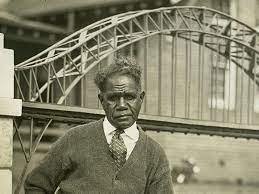
Douglas Grant was a remarkable man who lived a remarkable life. He was an Aboriginal Australian who served in World War I, survived as a prisoner of war, and became a public speaker, journalist, and artist. He was also a victim of racism, discrimination, and injustice. He died in 1951, but his legacy lives on. Here is his story and the cause of his death.
Contents
Early life and adoption
Douglas Grant was born around 1885 in north Queensland, near Malanda on the Atherton Tablelands. He belonged to the rainforest Indigenous Nations of the region. When he was about two years old, he witnessed a massacre of his people by colonial police during the Australian Frontier Wars. He was orphaned and rescued by two taxidermists, Robert Grant and E.J. Cairn, who were collecting specimens for the Australian Museum. They took him to Sydney and raised him as their foster son. They named him Douglas and gave him a Scottish education and culture. He attended Annandale public school and trained as a draughtsman, working for Mort’s Dock & Engineering. He also developed a love for Shakespeare, poetry, and bagpipes. According to Wikipedia, he was described as “a man of high attainments, with a great love for Shakespeare and poetry generally. He is an artist, and is said to play the bagpipes as well as any Scot.”
World War I and captivity
In 1913, Douglas Grant moved to Scone, New South Wales, where he worked as a wool classer. He enlisted in the Australian Army in 1916, despite the official policy that barred indigenous people from military service. He was sent to France to join the 13th Battalion. On 11 April 1917, during the First Battle of Bullecourt, he was wounded and captured by the German army. He was taken to a prisoner of war camp at Wittenberg, and later to another camp at Wünsdorf, near Berlin. There, he attracted the attention of the German anthropologists and scientists, who were fascinated by his appearance, intelligence, and culture. They studied him, photographed him, and made a plaster cast of his head. They also treated him with respect and kindness, and allowed him to write for the camp newspaper and give lectures to other prisoners. He became known as “the Black Anzac” and “the Digger with a Douser”.
Post-war life and struggles
After the war ended, Douglas Grant returned to Australia in 1919. He faced many difficulties and challenges in his post-war life. He suffered from shell shock and depression, and was admitted to Callan Park Hospital for the Insane in Sydney. He was discharged in 1921, but remained under the care of the hospital. He worked as a clerk and a librarian at the hospital, and also as a journalist and a public speaker. He advocated for the rights and welfare of Aboriginal people, and wrote articles and letters to newspapers and magazines. He also participated in the Anzac Day parades and ceremonies, and maintained contact with his former comrades and friends. However, he also faced racism, discrimination, and injustice from the Australian society and government. He was denied the right to vote, to own land, and to marry a white woman. He was also denied the war pension and the soldier settlement scheme that were offered to other veterans. He lived in poverty and isolation, and struggled with alcoholism and mental health issues.
Douglas Grant cause of death
Douglas Grant died on 4 December 1951, at the age of 66. His cause of death was a subarachnoid hemorrhage, which is a type of stroke caused by bleeding in the brain. He died in Prince Henry Hospital, Little Bay, and was buried in Botany Cemetery. He never married or had children. He left behind a legacy of courage, resilience, and dignity. He was a war hero, a cultural icon, and a human rights activist. He was also a victim of colonial violence, institutional racism, and social exclusion. He was a complex and contradictory figure, who embodied the contradictions and conflicts of Australian history and identity. He was, as the Australian Dictionary of Biography states, “a man of two worlds, neither of which gave him full recognition or acceptance”.
