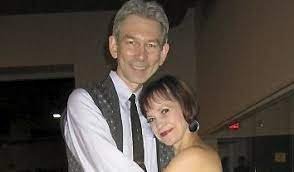
Carl Lee was an American actor who starred in several films and TV shows in the 1950s, 60s and 70s. He was the son of Canada Lee, a famous actor and boxer who broke racial barriers in Hollywood. Carl Lee followed his father’s footsteps and became a successful performer, but he also struggled with a heroin addiction that eventually led to his death. In this article, we will explore the life and career of Carl Lee, his relationship with director Shirley Clarke, and the circumstances of his death.
Contents
Early Life and Career
Carl Lee was born Carl Vincent Canegata on November 22, 1926 in New York City. His father was Canada Lee, a black actor who rose to fame in the 1930s and 40s for his roles in films such as Lifeboat, Cry, the Beloved Country, and Lost Boundaries. His mother was Frances Lee, a white actress who appeared in Broadway shows and films. Carl Lee had a mixed-race heritage, which made him face discrimination and prejudice in his childhood.
Carl Lee made his first film appearance in Human Desire (1954), an adaptation of Emile Zola’s novel La Bete Humaine. He played a minor role as a train conductor. He also appeared in several TV shows, such as The Nurses, The Defenders, and Caribe. He was billed as Canada Lee Jr. at age 16, when he played a student at Tuskegee Institute in an episode of American Inventory. His father starred in the same episode as George Washington Carver.
The Connection and Shirley Clarke
Carl Lee’s breakthrough role came in 1959, when he played a heroin dealer named Cowboy in The Connection, an off-Broadway play written by Jack Gelber and directed by Living Theatre co-founder Judith Malina. The play was a controversial and innovative piece of theater, as it depicted a group of drug addicts waiting for their dealer in a rundown apartment. The play also featured a jazz quartet led by Freddie Redd, who composed the original music for the show. The play won an Obie Award for best new play and ran for more than 700 performances.
In 1961, Carl Lee reprised his role as Cowboy in the film version of The Connection, directed by Shirley Clarke, a pioneering female filmmaker and a friend of Jack Gelber. The film was also groundbreaking, as it used a documentary-style approach and a cinema verite technique to create a realistic and immersive experience for the viewers. The film was banned in several states for its depiction of drug use and profanity, but it also received critical acclaim and won awards at the Cannes Film Festival and the Venice Film Festival.
While filming The Connection, Carl Lee fell in love with Shirley Clarke, who was married at the time to Bert Clarke, a film editor. Their relationship lasted almost 30 years, until Lee’s death. They collaborated on several other projects, such as The Cool World (1964), a film about a teenage gang in Harlem, and Portrait of Jason (1967), a documentary about a gay hustler and entertainer. They also worked on experimental films, such as The Magic Garden of Stanley Sweetheart (1970) and Ornette: Made in America (1985).
Later Career and Addiction
Carl Lee continued to act in films and TV shows throughout the 1960s and 70s. He played a jazz musician in A Man Called Adam (1966), opposite Sammy Davis Jr. and Cicely Tyson. He also played a drug lord in Super Fly (1972), one of the most popular blaxploitation films of the era. He also appeared in Good Times (1977), as Willona Woods’ ex-husband Ray, who makes sexual advances towards Thelma Evans.
However, Carl Lee’s career was overshadowed by his heroin addiction, which he developed in the late 1950s. He tried to quit several times, but he always relapsed. He also contracted AIDS from a dirty needle, which worsened his health. He died from a heroin overdose on April 17, 1986, in New York City. He was 59 years old.
Legacy and Influence
Carl Lee was a talented and versatile actor, who played a variety of roles in different genres and mediums. He was also a trailblazer, who broke stereotypes and challenged conventions in his performances. He was admired by many of his peers and fans, who considered him a hip and charismatic icon. In a 2000 interview, filmmaker James Toback stated, “In the sort of hip world of New York, Carl Lee was the hip-black-actor icon. He was for hip people what Sidney Poitier was for mainstream people.”
Carl Lee’s life and death also inspired other artists and writers, who used his story as a source of inspiration and reflection. For example, Spike Lee dedicated his film Jungle Fever (1991) to Carl Lee and his father Canada Lee. John Grisham named the protagonist of his novel A Time to Kill (1989) after Carl Lee, as he was a fan of his performance in The Connection. Samuel L. Jackson, who played Carl Lee Hailey in the film adaptation of A Time to Kill (1996), also cited Carl Lee as one of his influences.
Carl Lee was a tragic and complex figure, who left behind a legacy of art and passion. He was a victim of his own demons, but he was also a survivor of a harsh and unjust society. He was a heroin addict, but he was also a hero. He was Carl Lee.
