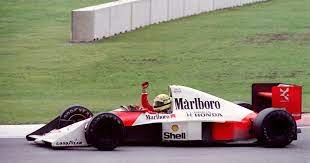
Ayrton Senna was one of the greatest Formula One drivers of all time. He won three world championships, 41 races, and 65 pole positions in his illustrious career. He was admired for his skill, speed, and passion on the track, as well as his charisma, generosity, and spirituality off it. He was a national hero in his native Brazil, where millions of people followed his every move and celebrated his victories.
But on May 1, 1994, Senna’s life came to a sudden and shocking end. He died after his car crashed into a concrete barrier while he was leading the San Marino Grand Prix at the Imola circuit in Italy. He was only 34 years old.
What caused Senna’s fatal crash? How did it affect the sport and the world? And what legacy did he leave behind? In this article, we will explore these questions and more.
Contents
The Imola Weekend: A Series of Disasters
The 1994 San Marino Grand Prix was the third race of the season, and it turned out to be one of the darkest weekends in the history of Formula One. It was marked by several accidents, injuries, and deaths that shocked the racing community and the fans.
The first incident happened on Friday, April 29, during the first practice session. Senna’s teammate at Williams, Damon Hill, spun off the track and hit a wall, damaging his car but escaping unhurt. A few minutes later, Senna’s compatriot and friend, Rubens Barrichello, crashed his Jordan car at the Variante Bassa chicane. He flew over a curb and hit a tire barrier, flipping his car several times before landing upside down. He suffered a broken nose and arm, and was knocked unconscious. He was taken to a hospital, where he regained consciousness and was later discharged.
The second incident happened on Saturday, April 30, during the final qualifying session. Austrian driver Roland Ratzenberger, who was making his third appearance in Formula One, lost control of his Simtek car at the Villeneuve corner. He had damaged his front wing in a previous lap, but decided to continue driving. The wing broke off and lodged under his car, causing him to veer off the track at high speed. He hit a concrete wall head-on, suffering severe head and neck injuries. He was pronounced dead on arrival at the hospital. He was the first driver to die in a Formula One race meeting since Riccardo Paletti in 1982.
Senna was deeply affected by Ratzenberger’s death. He visited the scene of the crash and talked to the medical staff and the officials. He also attended the drivers’ briefing, where he proposed the reformation of the Grand Prix Drivers’ Association, a body that represented the drivers’ interests and safety concerns. He was elected as one of the directors, along with Michael Schumacher and Gerhard Berger.
Despite his grief and anxiety, Senna managed to secure pole position for the race, his 65th and final one. He was determined to win his first race of the season, after failing to finish or score points in the first two races. He was trailing Schumacher, who had won both races, by 20 points in the championship standings.
The Race: Senna’s Last Moments
The race started on Sunday, May 1, at 2:00 p.m. local time. Senna had a good start, but Schumacher was close behind him. On the fifth lap, there was another accident. JJ Lehto, who had stalled his Benetton car on the grid, was hit from behind by Pedro Lamy’s Lotus at the Tamburello corner. The collision caused debris to fly over the fence and into the crowd, injuring several spectators and a police officer. The safety car was deployed to slow down the cars and allow the marshals to clear the track.
The safety car stayed on the track for five laps, during which Senna complained over the radio that it was going too slow and that his tires were losing temperature and pressure. He also asked his team to check his telemetry data, as he felt something was wrong with his car. The team assured him that everything was fine.
The race resumed on lap seven, with Senna leading Schumacher by 1.4 seconds. Senna completed the lap and entered the Tamburello corner for the eighth time. As he approached the corner, his car suddenly veered to the right and hit the concrete wall at an estimated speed of 310 km/h (193 mph). The impact was so severe that it tore off the right front wheel and suspension, which flew into the cockpit and struck Senna’s helmet. The car then slid along the wall and came to a stop on the grass.
The race was immediately red-flagged and stopped. The medical team arrived at the scene and found Senna unconscious and unresponsive. He had suffered multiple fractures at the base of his skull, as well as brain injuries. He was extracted from the car and airlifted to the Maggiore Hospital in Bologna, where he underwent emergency surgery. However, his condition was hopeless, and he was declared dead at 6:37 p.m. local time.
The cause of Senna’s crash was initially unclear. Some speculated that it was due to a puncture, a steering failure, or a driver error. However, after a lengthy investigation and a controversial trial, the Italian Supreme Court of Cassation ruled in 1999 that the crash was caused by a mechanical failure. According to the court, the steering column of Senna’s car had broken due to a poor welding job done by the Williams team. The team had modified the column at Senna’s request, to allow him to have a more comfortable driving position. The court also blamed the design of the Tamburello corner, which had no run-off area or adequate protection.
The Williams team denied any responsibility for the crash, and claimed that the column had broken as a result of the impact, not before. They also argued that Senna had lost control of the car due to the low tire pressure and the bumpy surface of the track. They were supported by some experts and witnesses, who testified that Senna had braked and steered before hitting the wall, indicating that he still had control of the car.
The court’s verdict was not unanimous, and the case remains controversial to this day. Some believe that the court was biased and influenced by the public pressure and the media attention. Some also question the validity and reliability of the evidence and the testimonies presented by both sides. The truth may never be known for sure, but what is certain is that Senna’s death was a tragic and avoidable loss.
The Aftermath: The Impact of Senna’s Death
Senna’s death had a profound impact on the sport and the world. It was a wake-up call for the safety of Formula One, which had become complacent and negligent after a long period without fatal accidents. It prompted the implementation of new safety measures, such as improved helmets, cockpit protection, crash structures, run-off areas, and medical facilities. It also led to the reestablishment of the Grand Prix Drivers’ Association, which became more active and influential in advocating for the drivers’ rights and welfare.
Senna’s death also affected his fellow drivers, especially those who were close to him or admired him. Many of them were traumatized and depressed by the loss of their friend and rival. Some of them, such as Alain Prost, Gerhard Berger, and Mika Hakkinen, retired from the sport soon after. Others, such as Michael Schumacher, Damon Hill, and David Coulthard, dedicated their victories and championships to Senna’s memory. Some of them also became involved in charitable and humanitarian causes, inspired by Senna’s example.
Senna’s death also touched the hearts of millions of fans around the world, especially in Brazil. He was mourned as a national hero and a symbol of pride and hope. His funeral was attended by over a million people, and his burial site became a pilgrimage destination. His legacy lives on through the Instituto Ayrton Senna, a foundation created by his family to support education and social development for children and young people in Brazil. His life and achievements have also been celebrated and documented in various books, films, and artworks.
Senna was more than a racing driver. He was a legend, a visionary, and a humanitarian. He was a man who lived his life with passion, courage, and faith. He was a man who inspired and influenced many people, both in and out of the sport. He was a man who left a mark on the world that will never be forgotten. He was Ayrton Senna.
