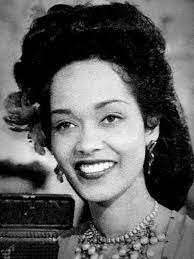
Francine Everett was a talented and beautiful actress and singer who rose to fame in the 1940s through her performances in race films, independently produced movies with all-black casts that catered to African-American audiences. She was dubbed “the most beautiful woman in Harlem” by a columnist and praised by filmmakers as a potential superstar. However, her career was cut short by the decline of race films and the discrimination of Hollywood. She died in 1999 at the age of 84, after a long illness that kept her away from the spotlight. What was the cause of her death and how did she live her life?
Early Life and Career
Francine Everett was born as Franciene Williamson in Louisburg, North Carolina, on April 13, 1915. Her father was a tailor and her family moved to New York during the Harlem Renaissance. She attended St. Marks School, but dropped out to pursue a career as a chorus girl in popular entertainment venues, such as the Savoy Ballroom and Small’s Paradise. She married Booker Everett in 1933, when she was 18, but he died shortly after. She then married actor Rex Ingram in 1936, who was famous for his role in The Green Pastures. They moved to Hollywood together, but Everett refused to accept stereotypical roles that demeaned black women. They divorced in 1939.
Everett made her film debut in 1939, opposite boxing champion Henry Armstrong in Keep Punching. She then starred in several race films, such as Paradise in Harlem (1939), Big Timers (1945), Tall, Tan and Terrific (1946), and Dirty Gertie from Harlem U.S.A. (1946). She also appeared as a singer in more than 50 short musical films, featuring some of the most renowned artists of the time, such as Dorothy Dandridge, Cab Calloway, and Count Basie. She also worked as a model for print advertisements for clothing and cosmetics.
Hollywood and Retirement
Everett’s association with Hollywood was brief and unsatisfactory. She only had bit parts in two Hollywood films, both with race-relations themes: Lost Boundaries (1949) and No Way Out (1950), which was Sidney Poitier’s first film. She was frustrated by the lack of opportunities and recognition for black actors and actresses in the mainstream industry. She once said: “I never got a chance to show what I could do.” According to IMDb.
After retiring from the entertainment industry, Everett took a clerical job at Harlem Hospital in New York. She retired from her hospital job in 1985, and in her later years she spoke about the race films at seminars sponsored by the International Agency for Minority Artist Affairs. She also served as a member of the Negro Actors Guild.
Death and Legacy
Everett died at a nursing home in The Bronx, New York, on May 27, 1999. The cause of her death was not disclosed, but it was reported that she had been ill for a long time. According to Blackpast.
Everett’s legacy lives on through her films, which have been rediscovered and appreciated by film historians and scholars of African-American cinema. She is regarded as one of the best black actresses of her time, who showed versatility and talent in her roles. She also represented a positive image of black women, who were often stereotyped or marginalized in mainstream films. She was a pioneer and a star of black cinema, who deserved more recognition and respect than she received.
I hope you liked my article. Please let me know if you have any feedback or questions. 😊
