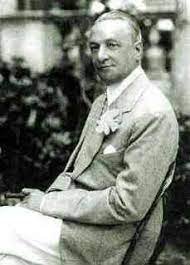
Florenz Ziegfeld was one of the most influential and successful theatrical producers in the history of Broadway. He was known for his lavish and spectacular revues, the Ziegfeld Follies, which featured some of the most talented and beautiful performers of his time. He also produced the musical Show Boat, which is considered one of the landmarks of American musical theater. But how did this legendary impresario die? What was the cause of his death? And what was his legacy in the world of entertainment?
The Illness That Led to His Death
According to Wikipedia, Florenz Ziegfeld died on July 22, 1932, at the age of 65, in Hollywood, California. The cause of his death was pleurisy, a condition that causes inflammation of the lining of the lungs and chest cavity. Pleurisy can cause chest pain, fever, cough, and difficulty breathing. It can be caused by various infections, injuries, or diseases that affect the lungs.
Ziegfeld had been ill intermittently since February 1932. He had suffered a severe attack of influenza during the try-out of his musical Hot-Cha! in Pittsburgh. He never fully recovered from this illness and had a relapse in June 1932. He was confined to his home in Hastings-on-Hudson, New York, where he was attended by his wife, actress Billie Burke.
In July 1932, he was taken to a sanitarium in New Mexico, hoping that the dry climate would help his condition. However, he did not improve and was transferred to a hospital in Hollywood. There, he developed pleurisy and both of his lungs became affected. His heart also weakened and he died on July 22, 1932.
The Legacy He Left Behind
Florenz Ziegfeld was a pioneer and a visionary in the field of musical theater. He revolutionized the genre of the revue by introducing elaborate costumes, sets, lighting, and choreography. He also showcased some of the most talented composers, lyricists, singers, dancers, comedians, and actors of his era. Some of the stars that he discovered or promoted include Fanny Brice, Eddie Cantor, W.C. Fields, Will Rogers, Bert Williams, Marilyn Miller, Ruth Etting, Nora Bayes, Helen Morgan, and many others.
He also produced some of the most memorable musicals in Broadway history, such as Show Boat (1927), which featured a groundbreaking story that dealt with racial issues and social themes. He also produced Sally (1920), Rio Rita (1927), The Three Musketeers (1928), Whoopee! (1928), and Bitter Sweet (1929).
Ziegfeld’s influence on American culture and entertainment was immense. He created a new standard of beauty and glamour with his Ziegfeld girls, who were admired by millions. He also inspired many other producers and directors who followed his footsteps and created their own musical shows and films.
Ziegfeld’s life and work have been depicted in various media forms, such as books, films, documentaries, musicals, and biographies. Some of the most notable examples are The Great Ziegfeld (1936), a film that won an Academy Award for Best Picture; Ziegfeld Follies (1945), a film that featured many of his former stars; Ziegfeld: The Man and His Women (1978), a television film that starred Paul Shenar as Ziegfeld; Funny Girl (1964) and Funny Lady (1975), musicals that portrayed the life of Fanny Brice; and Ziegfeld: A Night at the Follies (1999), a musical revue that recreated some of his famous numbers.
Florenz Ziegfeld was a legend in his own time and a legend for all time. He was a man who had a vision and a passion for creating beauty and entertainment. He was a man who glorified the American girl and the American dream. He was a man who died of pleurisy but left behind a legacy that lives on.
