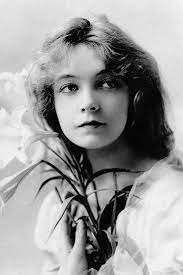
Lillian Gish was one of the most influential and prolific actresses in the history of cinema. Her film career spanned 75 years, from the silent era to the sound era, and she appeared in more than 100 films, many of them classics. She was also a director, a screenwriter, a stage performer, and an advocate for film preservation. She was called the “First Lady of American Cinema” and is credited with pioneering fundamental film performance techniques.
But how did this legendary star die? What was the cause of her death? And how did the world react to her passing? In this article, we will explore these questions and pay tribute to Lillian Gish’s remarkable life and legacy.
Contents
The Final Years of Lillian Gish
Lillian Gish never retired from acting. She continued to work in film, television, radio, and theater until her late eighties. Her last film role was in The Whales of August (1987), where she played opposite Bette Davis as two elderly sisters living on an island. The film was well-received by critics and audiences, and Gish earned praise for her performance.
Gish also received many honors and awards for her lifetime achievements in cinema. In 1971, she was given an Academy Honorary Award for “superlative artistry and for distinguished contribution to the progress of motion pictures”. In 1979, she was awarded the American Film Institute Life Achievement Award, becoming the first woman to receive it. In 1982, she was honored with a Kennedy Center Honor for her contribution to American culture through performing arts.
Gish remained active and healthy until her final years. She lived in a penthouse apartment in New York City, where she hosted many guests and friends from the film industry. She also traveled frequently to attend film festivals, retrospectives, and screenings of her films. She was known for her graciousness, generosity, and charm.
The Cause of Lillian Gish’s Death
Lillian Gish died on February 27, 1993, at the age of 99. She passed away peacefully at her home in New York City after suffering a heart attack. According to her niece Barbara Smith Conrad, who was with her at the time, Gish’s last words were “I’m so happy”. She had no children or surviving relatives.
Gish’s death was widely reported by the media and mourned by the public. Many celebrities and film personalities expressed their condolences and admiration for Gish. Among them were Robert Altman, Lauren Bacall, Martin Scorsese, Steven Spielberg, Elizabeth Taylor, Shirley Temple Black, Gregory Peck, Katharine Hepburn, and James Stewart.
Gish’s funeral was held on March 3, 1993, at St. Bartholomew’s Episcopal Church in New York City. It was attended by hundreds of people, including many stars from Hollywood’s golden age. Gish’s coffin was draped with a flag of the United States, honoring her patriotism and service during World War II. She was buried at Saint Bartholomew’s Columbarium in New York City.
The Legacy of Lillian Gish
Lillian Gish is widely regarded as one of the greatest actresses of all time. She is remembered for her expressive face, her delicate beauty, her emotional range, and her versatility. She starred in some of the most important films in cinema history, such as The Birth of a Nation (1915), Intolerance (1916), Broken Blossoms (1919), Way Down East (1920), Orphans of the Storm (1921), The Night of the Hunter (1955), and The Whales of August (1987). She worked with some of the most acclaimed directors in film history, such as D.W. Griffith, Victor Sjöström, King Vidor, Charles Laughton, Robert Altman, and Lindsay Anderson.
Gish also influenced many generations of actors and actresses with her style and technique. She taught acting classes at Harvard University and Columbia University in the 1970s and 1980s. She mentored young actors such as Helen Hayes, James Earl Jones, Geraldine Page, Mary Steenburgen, Sissy Spacek, and Anjelica Huston. She inspired many filmmakers such as Jean-Luc Godard, François Truffaut, Ingmar Bergman, Federico Fellini, Woody Allen, David Lynch, and Quentin Tarantino.
Gish also contributed to the preservation and appreciation of silent film. She wrote two books on film history: The Movies: Mr. Griffith and Me (1969) and Dorothy and Lillian Gish (1973). She donated many of her personal papers and memorabilia to various institutions such as the Library of Congress , the Museum of Modern Art , and the Academy of Motion Picture Arts and Sciences . She also supported the restoration and exhibition of silent films around the world.
Lillian Gish was a pioneer, a legend, and a treasure of American cinema. She left behind a rich and lasting legacy that will continue to inspire and delight film lovers for generations to come.
