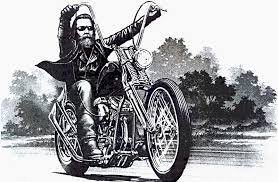
David Mann was a renowned American artist who captured the essence and spirit of the biker culture in his paintings. His artworks featured choppers, outlaws, and desert landscapes that inspired generations of motorcycle enthusiasts. He was also a biker himself, riding a customized 1948 Harley Davidson. But how did David Mann the artist die? What was his legacy and impact on the biker world? In this article, we will explore the life and death of David Mann, the biker artist and legend.
Early Life and Career
David Mann was born in Kansas City, Missouri, in 1940. He was the son of Paul Mann, a member of the Society of Scribes and Illuminators of London, who taught him how to draw and paint. David developed a passion for cars and motorcycles at an early age, and began pinstriping cars in high school. He also created his first painting, Hollywood Run , with watercolors, depicting a biker riding through the desert.
In 1963, he moved to California, where he discovered the chopper scene. He was fascinated by the customized motorcycles that had stripped-down frames, extended forks, and high handlebars. He joined the El Forastero Motorcycle Club, an outlaw biker group that was known for their wild lifestyle and rebellious attitude. He also met Ed “Big Daddy” Roth, a famous custom car builder and artist who published Chopper magazine. Roth bought David’s painting and commissioned him to create 14 more artworks for his magazine.
Easyriders and Fame
In 1971, David answered an ad in Easyriders magazine, a new publication that catered to the biker community. The magazine was looking for artists who “are hip and can draw choppers”. David submitted his painting Frisco Nights , which showed a group of bikers cruising through San Francisco at night. The painting was featured in the third issue of Easyriders , and David became a regular contributor to the magazine.
David’s paintings were popular among the readers, who admired his realistic and detailed style, his vivid colors, and his ability to capture the mood and atmosphere of the biker lifestyle. He also portrayed the changing times and trends in the biker world, such as the rise of women riders, the influence of Native American culture, and the impact of social issues like Vietnam War protests and drug abuse. Some of his most famous paintings include Ghost Rider , which showed a biker riding through a ghost town in the southwest; The Tattoo , which depicted a biker getting inked by a tattoo artist; and Hollywood Nights , which featured a biker partying with celebrities in Hollywood.
David’s paintings were not only admired by bikers, but also by art critics and collectors. His artworks were exhibited in galleries and museums around the world, such as the Guggenheim Museum in New York, the Smithsonian Institution in Washington D.C., and the Louvre Museum in Paris. He also received numerous awards and honors for his contribution to the biker culture and art history.
Health Problems and Death
Despite his success and fame, David suffered from health problems due to years of inhaling paint fumes. He developed respiratory issues that affected his breathing and forced him to retire in 2003. He was placed on a breathing machine and moved back to Kansas City with his wife Jacquie. He died on September 11, 2004, just one day after his 64th birthday.
David’s death was mourned by the biker community, who considered him as one of their own. His paintings were seen as icons of the biker culture, representing their freedom, adventure, and brotherhood. His legacy lives on through his artworks, which are still widely reproduced and sold as posters, calendars, t-shirts, and other merchandise. He is also remembered as a pioneer of biker art, who influenced many other artists who followed his footsteps.
Conclusion
David Mann was a biker artist who captured the essence and spirit of the biker culture in his paintings. He created realistic and detailed artworks that featured choppers, outlaws, and desert landscapes that inspired generations of motorcycle enthusiasts. He also contributed to Easyriders magazine, where he became a regular contributor and gained fame among the readers. He was also recognized by art critics and collectors for his artistic talent and vision. However, he suffered from health problems due to years of inhaling paint fumes, which led to his retirement and death in 2004. His paintings are still admired by bikers and art lovers alike, who see them as icons of the biker culture and history.
