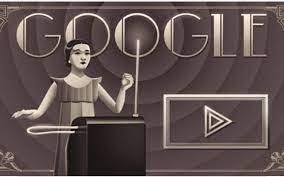
Clara Rockmore was a remarkable musician who mastered the theremin, an electronic instrument that produces eerie sounds without being touched. She was born in 1911 in Lithuania and became a violin prodigy at a young age. However, she had to give up the violin due to tendinitis in her bow arm, which was attributed to childhood malnutrition. She then discovered the theremin, which was invented by Leon Theremin, a fellow immigrant from Russia. She became his most prominent student and collaborator, and helped him refine the instrument. She performed widely and recorded an album called The Art of the Theremin in 1977. She died in 1998 at the age of 87 in New York City. What was the cause of her death and how did she live her last days?
Contents
The Cause of Death: Natural Causes
According to Wikipedia, Clara Rockmore died of natural causes on May 10, 1998. The exact cause of death was not reported, but it is likely that she succumbed to old age and declining health. She had been suffering from various ailments for almost a year before her death, according to The Washington Post. She had been hospitalized several times and had undergone surgery for a broken hip. She also had problems with her eyesight and hearing.
However, despite her physical challenges, she remained mentally alert and active until the end. She continued to play the theremin and to teach her students. She also participated in a documentary about her life and career, called Clara Rockmore, the Greatest Theremin Virtuosa, which was released in April 1998, just a month before her death. She also expressed her determination to live to see the birth of her great-grandniece, who was born two days before she passed away.
The Legacy of Clara Rockmore: The Queen of the Theremin
Clara Rockmore is widely regarded as the greatest theremin player of all time. She had a remarkable technique and musicality that made the instrument sound expressive and beautiful. She played classical pieces by Bach, Saint-Saens, Rachmaninoff, and others with precision and emotion. She also had perfect pitch and could play up to five octaves on the theremin.
She influenced the development of the theremin by giving feedback to Leon Theremin on how to improve its design and functionality. She convinced him to make it more responsive and to increase its range of notes. She also helped him promote the instrument by giving demonstrations and concerts.
She inspired many other musicians and composers who were fascinated by the theremin and its possibilities. Among them were Robert Moog, who produced her album and later became famous for his synthesizers; Paul Robeson, who toured with her as a singer; and Jonny Greenwood, who used the theremin in some of Radiohead’s songs.
She also contributed to the cultural history of the 20th century by being part of several artistic movements and events. She was involved in the avant-garde scene in New York in the 1930s, where she met artists like Salvador Dali and Man Ray. She witnessed the rise of electronic music and its impact on popular culture. She also appeared in several films and documentaries, such as Theremin: An Electronic Odyssey (1994), which revived interest in the instrument and its inventor.
