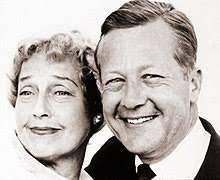
Jeanette MacDonald was one of the most popular and influential singers and actresses of the 1930s and 1940s. She starred in 29 feature films, many of them musicals, and recorded extensively, earning three gold records. She also appeared in opera, concerts, radio, and television, and inspired a generation of singers with her soprano voice and operatic style. But how did she die, and what impact did her death have on the world of music?
Contents
The Early Years of Jeanette MacDonald
Jeanette MacDonald was born on June 18, 1903, in Philadelphia, Pennsylvania. She was the youngest of three daughters of Daniel and Anna MacDonald, a factory foreman and a housewife. She had a sister named Blossom, who later became a character actress known as Marie Blake. Jeanette showed an early talent for singing and dancing, and began performing in local shows and operas when she was very young. She also took singing lessons with various teachers, including Wassili Leps, a Russian opera singer.
When she was 16, she moved to New York with her sister Blossom, and joined the chorus of a musical revue at the Capitol Theatre on Broadway. She soon landed roles in other musical productions, such as Tangerine, The Night Boat, and Sunny Days. She also appeared in some short films for Paramount Pictures, but was not considered a star until she was discovered by Ernst Lubitsch, a famous director who cast her opposite Maurice Chevalier in The Love Parade (1929), a musical comedy that was nominated for six Academy Awards.
The Rise to Stardom of Jeanette MacDonald
The Love Parade was a huge success, and launched Jeanette MacDonald’s career as a leading lady in musical films. She made several more films with Chevalier, such as Love Me Tonight (1932), The Merry Widow (1934), and One Hour with You (1932), which were also nominated for Best Picture Oscars. She also worked with other leading men, such as Jack Buchanan, Ramon Novarro, and Reginald Denny.
In 1933, she signed a contract with Metro-Goldwyn-Mayer (MGM), where she met Irving Thalberg, a powerful producer who gave her more artistic freedom and better roles. She also met Nelson Eddy, a baritone singer who became her most famous co-star and romantic partner. They made eight films together, starting with Naughty Marietta (1935), which won an Oscar for Best Sound Recording. Their other films included Rose-Marie (1936), Maytime (1937), Sweethearts (1938), New Moon (1940), Bitter Sweet (1940), I Married an Angel (1942), and The Girl of the Golden West (1938). Their films were immensely popular with audiences, who loved their chemistry and their duets of operetta songs.
Jeanette MacDonald also made some non-musical films, such as San Francisco (1936), which co-starred Clark Gable and Spencer Tracy, and was another Best Picture nominee. She also played the title role in The Firefly (1937), a spy drama based on a Rudolf Friml operetta. She also ventured into opera, making her debut as Marguerite in Faust at the Chicago Civic Opera in 1939. She continued to perform in opera houses across the country, as well as in concerts and radio shows.
The Personal Life of Jeanette MacDonald
Jeanette MacDonald had a complicated personal life, marked by several romances and controversies. She was engaged to Bob Ritchie, a wealthy businessman, in 1928, but broke off the engagement after meeting Maurice Chevalier. She had a brief affair with Chevalier, but he was married and did not want to divorce his wife. She then dated Irving Stone, a producer who proposed to her several times, but she refused.
She met Gene Raymond, an actor and singer, in 1935, and married him in 1937. Their marriage was reportedly happy at first, but they had no children and grew apart over the years. Raymond was rumored to be bisexual and to have affairs with men and women. Jeanette also had a long-term relationship with Nelson Eddy, who was married to Ann Franklin. They never divorced their spouses or married each other, but they remained close until Jeanette’s death.
Jeanette MacDonald was also involved in philanthropic causes, such as supporting war relief efforts during World War II. She entertained troops overseas with the USO shows, and raised funds for various charities. She was awarded the Legion of Honor by France for her contributions to French culture.
The Death of Jeanette MacDonald
Jeanette MacDonald suffered from heart problems since her childhood. She had rheumatic fever when she was 12, which damaged her heart valves. She also had high blood pressure and angina, which caused her chest pain and shortness of breath. She had several heart attacks in the 1950s and 1960s, which forced her to retire from performing. She also had a stroke in 1963, which affected her speech and memory.
In 1964, she decided to undergo an experimental surgery to replace her damaged heart valves with artificial ones. She traveled to Houston, Texas, where she was scheduled to have the operation by Dr. Michael DeBakey, a renowned heart surgeon. However, she suffered another heart attack while waiting for the surgery, and died on January 14, 1965, at the age of 61.
Her death was a shock to her fans and the music industry. She was given a funeral at the All Saints Episcopal Church in Beverly Hills, California, where a recording of her singing “Ah, Sweet Mystery of Life” was played. She was buried at the Forest Lawn Memorial Park in Glendale, California, next to her husband Gene Raymond, who died in 1998.
The Legacy of Jeanette MacDonald
Jeanette MacDonald is remembered as one of the greatest singers and actresses of the golden age of Hollywood musicals. She introduced opera to millions of moviegoers, and influenced many singers who followed her, such as Judy Garland, Julie Andrews, Barbra Streisand, and Sarah Brightman. She also left behind a rich legacy of recordings, films, and memorabilia, which are cherished by her fans and collectors.
She has been honored with several awards and tributes, such as a star on the Hollywood Walk of Fame, a postage stamp by the US Postal Service, and a biography by Edward Baron Turk. She has also been inducted into the Grammy Hall of Fame and the Hit Parade Hall of Fame. She has been the subject of several documentaries and books, such as Sweethearts by Sharon Rich and Nelson Eddy: The Opera Years by Gail Lulay.
Jeanette MacDonald’s cause of death was a tragic end to a brilliant career. But her voice and her spirit live on in her music and her films, which continue to enchant and inspire generations of fans around the world.
