Alfred Atmore Pope was a prominent American industrialist and art collector who lived from 1842 to 1913. He was the father of Theodate Pope Riddle, a noted American architect who designed Hill-Stead, the family estate in Farmington, Connecticut. Pope was one of the earliest American collectors of Impressionist paintings, acquiring works by Manet, Monet, Degas, Pissarro, Renoir, Whistler, and Cassatt. He was also the president of the Cleveland Malleable Iron Company and the National Malleable Castings Company, which made him a wealthy and influential figure in the industrial and social circles of his time. But how did Alfred Pope die? What was the cause of his death? And what legacy did he leave behind?
The Final Years of Alfred Pope
According to Wikipedia, Alfred Pope died at his home in Farmington, Connecticut on August 5, 1913. He was 71 years old at the time of his death. The exact cause of his death is not specified, but it is likely that he succumbed to natural causes related to old age or illness. He had been suffering from inflammation of the trigeminal nerve, a condition that causes severe facial pain, since 1910. He had also been diagnosed with diabetes in 1909. His health had deteriorated in the last years of his life, and he had spent most of his time at Hill-Stead, where he enjoyed the peaceful surroundings and the company of his family and friends.
Pope’s death was mourned by many people who knew him personally or admired him for his achievements and contributions. His obituary in The New York Timesdescribed him as “a man of rare culture and refinement” who had “a keen appreciation of art and literature”. It also praised him for his “remarkable business ability” and his “generous public spirit”. His funeral was attended by hundreds of people, including prominent figures from the industrial, financial, artistic, and social spheres. He was buried at Riverside Cemetery in Farmington, next to his wife Ada Lunette Brooks, who had died in 1899.
The Legacy of Alfred Pope
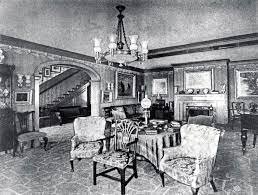
Alfred Pope’s legacy lives on through his art collection and his family estate. His daughter Theodate inherited Hill-Stead and its contents, and she stipulated in her will that it become a museum as a memorial to her parents and “for the benefit and enjoyment of the public”. She also called for the house and its contents to remain intact, not to be moved, lent or sold. Hill-Stead Museum opened to the public in 1947, one year after Theodate’s death. It is now a National Historic Landmark that showcases Pope’s impressive collection of Impressionist paintings, as well as furniture, ceramics, prints, textiles, and other objects that reflect his taste and personality. The museum also hosts various events and programs that celebrate art, history, nature, and culture.
Pope’s art collection is considered one of the finest and most important in America. It reflects his vision and passion for art, as well as his personal relationships with some of the artists he collected. He was especially close to Whistler, whom he met in Paris in 1894 and who influenced his aesthetic sensibility. He also corresponded with Cassatt, who advised him on buying paintings by her fellow Impressionists. Pope’s collection represents some of the best examples of Impressionist art in terms of quality, diversity, and significance. It also reveals Pope’s appreciation for beauty and innovation in art.
Alfred Pope was a remarkable man who left a lasting mark on the world through his business
