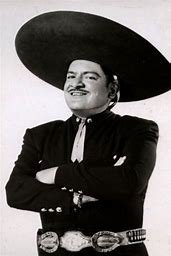
José Alfredo Jiménez was one of the most influential and prolific composers of regional Mexican music and rancheras in the 20th century. He wrote over a thousand songs that have been covered by various artists and have become part of the cultural identity of Mexico and Latin America. However, his life was cut short by a chronic liver disease that he suffered from for years. In this article, we will explore the cause of death of José Alfredo Jiménez and how it affected his musical legacy.
Contents
The Early Life and Career of José Alfredo Jiménez
José Alfredo Jiménez Sandoval was born on January 19, 1926, in Dolores Hidalgo, Guanajuato, Mexico. His father, Agustín, who owned a small drugstore, died when he was just 10 years old, leaving the family almost destitute. His mother, Carmelita Sandoval, moved her four children to Mexico City where she opened a small store but still struggled to make ends meet. Jiménez completed elementary school but had to work from an early age to help support the family: shining shoes, busing tables, loading trucks, and selling women’s footwear door to door. (For a time, Jiménez played soccer on a semi-pro team, and was known to be a pretty good goalie.)
He got his first big break in the music business after taking a job as a waiter at a Yucatecan restaurant in the capital named La Sirena. He struck up a friendship with the owner’s son, who played guitar in a trio called Los Rebeldes, and Jiménez was soon singing and writing songs for the group. In 1948, he made his radio debut with “The Rebels” on Mexico’s powerful and popular XEW. His first song was recorded two years later, also as a result of his work at La Sirena. One of the restaurant’s regular customers happened to be Andrés Huesca, the famed harpist from Veracruz who was a prime exponent of son jarocho, the southern folk music style featuring harp, guitars and rhythmic footwork. Huesca was impressed by the songs he heard from the young composer, including “Yo,” which was to become a ranchera classic. In 1950, the song was recorded by Andrés Huesca y Sus Costeños, becoming one of the first in a long line of hits for Jiménez
The composer’s straight-from-the-heart lyrics, devoid of any literary pretensions, touched a deep chord in the Mexican psyche. His unconventional, emotive vocal delivery on his own songs, combined with the arrangements of Rubén Fuentes and the accompaniment of the Mariachi Vargas de Tecalitlán, created some of the most beloved mariachi recordings of all time and made Jiménez a cultural icon not only in Mexico but throughout Latin America
The Alcoholism and Cirrhosis of José Alfredo Jiménez
Jiménez was known for his heavy drinking habits, which he often expressed in his songs. He once said: “I drink because I like it and because it makes me forget my sorrows.” However, his alcohol consumption took a toll on his health and led to his diagnosis of cirrhosis of the liver in 1968. Cirrhosis is a chronic condition that causes scarring and damage to the liver tissue, affecting its function and leading to complications such as bleeding, infections, ascites (fluid accumulation in the abdomen), hepatic encephalopathy (brain dysfunction), portal hypertension (high blood pressure in the vein that carries blood from the digestive organs to the liver), and liver cancer
Jiménez did not receive proper medical treatment for his condition and continued to drink despite his doctor’s advice. He also suffered from depression and insomnia, which worsened his situation. He tried to cope with his illness by writing more songs and performing as much as he could. He even recorded an album titled “Gracias” (Thank You) in 1973 as a farewell gesture to his fans and friends. However, his health deteriorated rapidly and he was hospitalized several times in his last years.
The Death and Legacy of José Alfredo Jiménez
Jiménez died on November 23, 1973, at the age of 47 in Mexico City. The cause of his death was complications resulting from cirrhosis of the liver He was buried in his hometown of Dolores Hidalgo, where a monument was erected in his honor. His funeral was attended by thousands of people who mourned his passing and celebrated his music.
Jiménez left behind an extraordinary repertoire of more than 1,000 songs, which have been covered by renowned artists from around the Spanish-speaking world, most notably by the following artists: Selena, Miguel Aceves Mejía, Enrique Bunbury, Antonio Aguilar, Tania Libertad, Luis Aguilar, Lola Beltrán, Vikki Carr, Gualberto Castro, Rocío Dúrcal, Alejandro Fernández, Pedro Fernández, Vicente Fernández, Los Relámpagos del Norte con Cornelio Reyna y Ramón Ayala, Los Tigres del Norte, Manolo García, Little Joe Hernández & The Latinaires, Julio Iglesias, Pedro Infante, the Mexican rock group Maná, Luis Miguel, Jorge Negrete, Sunny Ozuna & The Sunliners, María Dolores Pradera, Javier Solís, and Chavela Vargas
Some of his most famous songs are: “Yo”, “Me equivoqué contigo”, “Ella”, “Paloma querida”,“Que se me acabe la Vida”, “Tú y la mentira”, “Media vuelta”, “El Rey”, “Sin sangre en las venas”, “El jinete”, “Si nos dejan”, “Amanecí en tus brazos”, “Llegando a ti”, “Tu recuerdo y yo”, El hijo del pueblo”, “Cuando el destino”, “El caballo blanco”, “Llegó borracho el Borracho” and “Que te vaya bonito”, as well as “Camino de Guanajuato”, where he sang about his home state of Guanajuato
Jiménez’s songs have been recognized as part of the cultural heritage of Mexico and have been included in various anthologies and collections. His music has also been featured in films, television shows, and documentaries. He has received numerous awards and honors for his contribution to Mexican music, such as the Latin Grammy Lifetime Achievement Award in 2004 and the induction into the Billboard Latin Music Hall of Fame in 2001
José Alfredo Jiménez was a musical genius who captured the essence of the Mexican soul with his simple yet profound songs. He was a master of the ranchera genre and a pioneer of the modern regional Mexican music. He was a legend who left an indelible mark on the history and culture of Mexico and Latin America. He was the king of ranchera music who died of cirrhosis.
