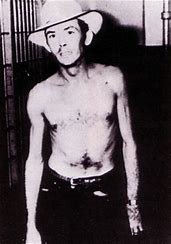
Hank Williams Sr. was one of the most influential country music artists of all time, but his life was cut short at the age of 29. His death on January 1, 1953, has been the subject of much speculation and controversy, as there are many conflicting accounts and unanswered questions about what really happened to him.
The Final Journey
Williams was scheduled to perform at a concert in Charleston, West Virginia, on New Year’s Eve, 1952, but the show was canceled due to an ice storm. He hired a college student named Charles Carr to drive him to his next appearance, a concert in Canton, Ohio, on New Year’s Day. Before leaving Montgomery, Alabama, Williams received a sedative from his regular doctor, who had allegedly bought a fake medical diploma and was known to overprescribe drugs. According to New York Post, Williams also had a mild case of spina bifida occulta, a spinal disorder that caused him chronic pain and led him to abuse alcohol and painkillers.
The duo stopped at the Andrew Johnson Hotel in Knoxville, Tennessee, where Williams was given another injection of B12 and morphine by the hotel doctor. He was already drunk and looked groggy when he left the hotel. Some witnesses claimed that he had to be carried to the car by hotel porters. Carr later said that he talked to Williams for the last time when they stopped at a restaurant in Bristol, Virginia. After that, Williams fell asleep in the back seat of the car.
Carr continued driving until he reached a gas station in Oak Hill, West Virginia, where he realized that Williams was unresponsive and stiff. He asked for help from the owner of the station, who called the police. A local doctor examined Williams and pronounced him dead. The official time of death was 7:00 a.m., January 1, 1953.
The Cause of Death
The cause of death was initially listed as heart failure due to insufficiency of the right ventricle of the heart. However, this diagnosis was based on a superficial examination by a doctor who was not a coroner or a pathologist. The body also had bruises and needle marks that suggested a possible fight or drug overdose. According to Wikipedia, an autopsy report by Dr. Ivan Malinin noted hemorrhages in the heart and neck and a welt on his forehead. Malinin concluded that Williams died of acute right ventricular dilation, meaning that his heart just stopped beating.
However, some experts have challenged this finding and suggested other possible causes of death. For example, Dr. William D. Lindsey, a forensic toxicologist and expert on morphine poisoning, argued that Williams died of an accidental overdose of morphine and alcohol. He claimed that the combination of these substances caused respiratory depression and cardiac arrest. He also pointed out that the B12 injection that Williams received contained 30 milligrams of morphine, which was a lethal dose for someone with his tolerance level.
Another theory is that Williams died of hypothermia or exposure to cold weather. He was wearing only a thin suit and a light coat when he left Knoxville, and the temperature dropped below freezing during the night. He may have also suffered from hypoxia or lack of oxygen due to the high altitude and low air pressure in the mountains. Some researchers have suggested that these factors could have triggered a fatal heart attack or stroke.
The Aftermath
Williams’ death shocked the country music world and his fans. His body was transported back to Montgomery and placed in a silver coffin at his mother’s boarding house. His funeral took place on January 4 at the Montgomery Auditorium, where an estimated 15,000 to 25,000 people attended. The auditorium was filled with 2,750 mourners, while thousands more lined up outside. The funeral service featured performances by Roy Acuff, Red Foley, Ernest Tubb, and other country stars. When the news of his death reached Canton, Ohio, where he was supposed to perform, the crowd sang his song “I Saw the Light” in unison.
Williams’ death also sparked many rumors and conspiracy theories about what really happened to him and who was responsible. Some people blamed Carr for not checking on him sooner or for giving him drugs or alcohol along the way. Others accused Audrey Williams, his ex-wife and manager, of having him killed for money or revenge. Some even speculated that Williams faked his death and lived under an assumed name for years.
The truth may never be known for sure, as there are no definitive records or witnesses to confirm or deny any of these claims. However, one thing is certain: Hank Williams Sr.’s legacy lives on through his music and his influence on generations of artists and fans.
