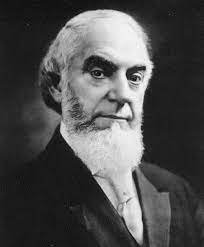
Charles Taze Russell was a prominent religious leader in the late 19th and early 20th centuries. He founded the International Bible Students Association, which later became known as the Jehovah’s Witnesses. He was also an early supporter of Zionism and a prolific writer and publisher of biblical studies. But how did he die and what were the circumstances of his death?
Early Life and Ministry
Charles Taze Russell was born on February 16, 1852, in Allegheny, Pennsylvania, to Scotch-Irish parents. He was the second of five children, of whom two survived into adulthood. His mother died when he was nine years old
He grew up in a religious environment, but he became disillusioned with the doctrines of Presbyterianism and Congregationalism, especially the idea of eternal hell. He drifted into skepticism until he encountered some followers of the Adventist movement, which taught that the Bible could be used to predict God’s plan of salvation and the end of the world
With the help of tutors, Russell learned to use Hebrew and Greek dictionaries to study the Bible. He formed his first Bible classes in 1872 and began to develop his own interpretations of biblical prophecies. He believed that Christ’s invisible return had occurred in 1874 and that the end of the Gentile times and the beginning of a golden age would come in 1914
In 1879, he started a monthly religious magazine called Zion’s Watch Tower and Herald of Christ’s Presence. In 1881, he co-founded Zion’s Watch Tower Tract Society with William Henry Conley as president. In 1884, he became the president of the corporation, which grew into a large publishing business. He wrote many articles, books, tracts, pamphlets, and sermons, totaling approximately 50,000 printed pages. His most famous work was a six-volume series titled Studies in the Scriptures, which sold nearly 20 million copies in several languages during his lifetime
He also traveled extensively to preach his message and to visit his followers around the world. He was popular among many people, especially Zionists, who appreciated his support for their cause. He also faced opposition and criticism from some religious groups and individuals, who accused him of heresy, fraud, and immorality
Final Years and Death
In 1914, Russell’s prediction of the end of the Gentile times did not materialize as he expected. He revised his calculations and claimed that the events he foresaw were happening invisibly in heaven. He continued to preach that God’s kingdom by Christ would soon be established on earth after a war between capitalism and socialism
He also continued to travel and to write until his health deteriorated. He suffered from chronic cystitis, a bladder infection that caused him pain and discomfort. He also had heart problems and diabetes
In October 1916, he embarked on a speaking tour across western and southwestern states. He was accompanied by his secretary Menta Sturgeon and his personal physician Dr. William E. Spill. On October 29, he delivered his last public speech in Los Angeles, California. The next day, he boarded a train to return to New York
On October 31, he died on the train near Pampa, Texas. He was 64 years old. His death certificate listed cystitis as the cause of death. His body was taken to Chicago, where a funeral service was held on November 5 at Orchestra Hall. His remains were then transported to Pittsburgh, where another service was held on November 6 at Carnegie Hall. He was buried at Rosemont United Cemetery in Allegheny County, Pennsylvania
Legacy and Controversy
Charles Taze Russell left behind a large following of Bible Students who revered him as a faithful servant of God and a wise teacher of truth. However, after his death, a crisis emerged within his organization over the leadership and direction of the movement.
Joseph Rutherford, who succeeded Russell as president of the Watch Tower Society, introduced many changes that alienated some of Russell’s loyal supporters. He claimed to be the sole channel of God’s communication to his people and denounced those who disagreed with him as apostates.
He also published a seventh volume of Studies in the Scriptures in 1917 without Russell’s authorization or involvement. The book contained new interpretations that contradicted some of Russell’s teachings.
As a result, many Bible Students left or were expelled from the Watch Tower Society and formed their own groups that retained variations on the name Bible Students.
Those who remained with Rutherford adopted the name Jehovah’s Witnesses in 1931 and became a distinct religious organization that differed from Russell’s original vision
Charles Taze Russell’s death also sparked some controversy and speculation among his followers and critics. Some claimed that he was poisoned by his enemies or by his doctor. Others claimed that he was resurrected and taken to heaven. Still others claimed that he was the faithful and wise servant mentioned in Matthew 24:45-47 and that he would return to lead God’s people in the future
However, none of these claims have any solid evidence to support them. The most likely explanation is that Russell died of natural causes related to his chronic illness and old age.
Charles Taze Russell was a controversial and influential figure in the history of Christianity. He left a lasting impact on millions of people who either followed or opposed his teachings. He also left a legacy of controversy and division that persists to this day.
