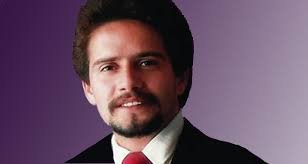
Frankie Ruiz was a Puerto Rican singer and songwriter who rose to fame in the 1980s and early 1990s as one of the leading figures of the salsa romántica subgenre. His smooth voice and romantic lyrics earned him the nickname of “El Papá de la Salsa” (The Daddy of Salsa). However, behind his success, there was a dark side of drug and alcohol abuse that eventually led to his premature death at the age of 40. What was Frankie Ruiz’s cause of death and how did his addiction affect his life and career?
Early Life and Musical Beginnings
Frankie Ruiz was born in Paterson, New Jersey, in 1958, to a Puerto Rican couple who had moved to the city. He showed an early interest in music and started singing with local bands at the age of nine. He recorded his first song “Salsa Buena” with a group called Orquesta Nueva, led by Charlie López. When he was 16, he moved with his mother to Mayagüez, Puerto Rico, where he joined a salsa band called La Solución. He became their lead vocalist and recorded three albums with them.
In 1977, he was hired by the renowned bandleader Tommy Olivencia, who had a reputation for discovering talented singers. Ruiz recorded three more albums with Olivencia’s orchestra, and achieved his first solo hit with “Lo Dudo”, a cover of a Mexican ballad. This song marked the beginning of a new trend in salsa, which consisted of adapting romantic pop songs into salsa arrangements. This style, known as salsa romántica, appealed to a wider audience and made Ruiz a star.
Fame and Addiction
Ruiz’s popularity soared in the 1980s, as he released several successful solo albums and collaborated with other artists such as Luis Enrique, Eddie Santiago, and Lalo Rodríguez. He also toured extensively in Latin America, Europe, and the United States, performing at prestigious venues such as Madison Square Garden and Radio City Music Hall. He was considered one of the best salseros ever and had a loyal fan base that admired his charisma and style.
However, Ruiz also developed a serious problem with drugs and alcohol that affected his health and behavior. He started using cocaine and heroin in the late 1970s, and became addicted to them. He also drank heavily and smoked cigarettes. He often missed concerts or showed up late and intoxicated. He had several legal troubles, such as arrests for drug possession, assault, and driving under the influence. He also had conflicts with his record labels, managers, and fellow musicians.
Ruiz tried to overcome his addiction several times, but always relapsed. He went to rehab centers in Puerto Rico, New York, and Florida, but none of them worked for him. He also sought spiritual help from various religions, such as Christianity, Islam, and Santería. He even changed his name to Frankie Joe for a while, hoping to start a new life. However, none of these attempts were successful.
Decline and Death
Ruiz’s addiction took a toll on his physical and mental health. He suffered from hepatitis C, cirrhosis of the liver, pancreatitis, ulcers, depression, paranoia, and hallucinations. He also contracted HIV from sharing needles with other drug users. He lost weight and looked frail and aged.
In 1998, Ruiz was hospitalized after performing at Madison Square Garden in New York City. He had liver failure due to cirrhosis and needed a transplant. However, he was not eligible for one because of his HIV status. He also refused to take antiretroviral drugs because he believed they were harmful.
On August 9, 1998, Frankie Ruiz died of complications from AIDS at the age of 40 in Newark Beth Israel Medical Center in New Jersey. His death shocked the salsa world and saddened his fans around the globe. He was buried in Mayagüez Cemetery in Puerto Rico.
Legacy
Frankie Ruiz left behind a legacy of more than 20 albums and dozens of hits that are still played on salsa radio stations and clubs today. His songs are considered classics of the genre and have influenced many other singers who followed his footsteps. Some of his most famous songs are “Desnúdate Mujer” (Undress Woman), “Mi Libertad” (My Freedom), “Bailando” (Dancing), “Tu Con Él” (You With Him), “La Rueda” (The Wheel), “La Cura” (The Cure), “Como Lo Hacen” (How They Do It), among others.
Ruiz is also remembered for his charisma and passion on stage, as well as for his personal struggles with addiction. His life story has been portrayed in documentaries, books, plays, and songs by other artists. He has received several posthumous honors, such as a star on the Walk of Fame in Union City, New Jersey, where he grew up, and a street named after him in Paterson, New Jersey, where he was born.
Frankie Ruiz was a salsa legend who captivated millions of fans with his voice and style. He was also a human being who suffered from a disease that he could not overcome. His cause of death was a tragic consequence of his addiction, but his music lives on as a testament of his talent and spirit.
