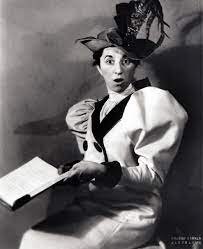
Billie Burke was a famous actress who starred in many Broadway, radio, and film productions. She is best remembered for her role as Glinda the Good Witch of the North in the classic movie musical The Wizard of Oz (1939). But how did she die and what was her cause of death?
Contents
Early Life and Career
Billie Burke was born Mary William Ethelbert Appleton Burke on August 7, 1884 in Washington, D.C. Her father was a circus clown, and she traveled with him across the United States and Europe as a child. She developed a love for the stage and made her debut in London in 1903. She later moved to New York and became a popular Broadway actress. She married Florenz Ziegfeld Jr., a famous theatrical producer, in 1914. They had one daughter, Patricia, in 1916.
Burke also ventured into the film industry and made her first movie, Peggy, in 1915. She was one of the highest-paid actresses at the time and appeared in several silent films and serials. She retired from films in 1921 to focus on her family and stage career.
Return to Hollywood and The Wizard of Oz
After the stock market crash of 1929, Burke and her husband lost most of their fortune and she had to resume her film career. She made her first talkie, A Bill of Divorcement, in 1932. She played mostly supporting roles as wealthy or eccentric society ladies, often with a high-pitched voice and a fluttery mannerism. She was nominated for an Academy Award for Best Supporting Actress for her role as Emily Kilbourne in Merrily We Live (1938).
Her most iconic role came in 1939, when she played Glinda the Good Witch of the North in The Wizard of Oz. She wore a pink gown and a tall crown and carried a magic wand. She helped Dorothy (Judy Garland) and her friends on their journey to see the Wizard (Frank Morgan) and return to Kansas. She also sang part of the song “We’re Off to See the Wizard” with Dorothy.
Later Years and Death
Burke continued to work in films, radio, and television until the late 1950s. She appeared in several comedies, such as the Topper series, Father of the Bride (1950), and Father’s Little Dividend (1951). She also hosted her own radio show, At Home with Billie Burke, from 1951 to 1952.
Burke’s husband died in 1932 and she never remarried. She lived in Los Angeles with her daughter and grandchildren. She suffered from Alzheimer’s disease in her later years and died of natural causes on May 14, 1970 at the age of 85. She was buried at Kensico Cemetery in Valhalla, New York.
Legacy and Influence
Billie Burke was one of the most versatile and talented actresses of her generation. She had a long and successful career on stage and screen, spanning over five decades. She was admired for her beauty, charm, wit, and grace. She left behind a rich legacy of memorable performances, especially as Glinda the Good Witch of the North.
Her role as Glinda has influenced many other portrayals of good witches in popular culture, such as Samantha Stephens (Elizabeth Montgomery) in Bewitched (1964-1972), Glinda (Kristin Chenoweth) in Wicked (2003-present), and Glinda (Michelle Williams) in Oz the Great and Powerful (2013). Her character has also become a symbol of kindness, wisdom, and magic for generations of children and adults who love The Wizard of Oz.
According to Wikipedia, Billie Burke is ranked among the American Film Institute’s greatest female stars of classic Hollywood cinema. She has a star on the Hollywood Walk of Fame at 6617 Hollywood Boulevard. She was also honored with a postage stamp by the United States Postal Service in 1994 as part of their Legends of Hollywood series.
