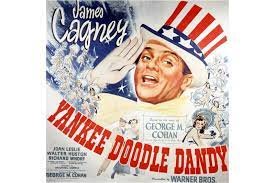
George M. Cohan was one of the most influential figures in American musical theatre, who wrote, composed, produced, and starred in dozens of Broadway shows. He also gave the nation some of its most memorable patriotic songs, such as “Over There”, “You’re a Grand Old Flag”, and “I’m a Yankee Doodle Dandy”. But how did this legendary entertainer die? Here is a brief overview of his life and death.
Early Life and Career
Cohan was born on July 3, 1878, in Providence, Rhode Island, to Irish Catholic parents who were traveling vaudeville performers. He claimed that he was born on the Fourth of July, which suited his patriotic image. He joined his parents and sister on stage when he was still an infant, and learned to dance, sing, act, and play the violin. He was the fourth member of the family vaudeville act called “The Four Cohans”, which toured the country from 1890 to 1901.
Cohan made his Broadway debut in 1893 in a sketch called The Lively Bootblack. He soon started writing his own vaudeville skits and songs, and formed his own theatrical company with his friend Sam H. Harris. His first full-length musical, Little Johnny Jones, opened in 1904 and introduced two of his most famous songs: “Give My Regards to Broadway” and “The Yankee Doodle Boy”. He went on to create more than 50 shows and publish more than 300 songs during his lifetime.
Fame and Fortune
Cohan became known as “the man who owned Broadway” in the decade before World War I, as he dominated the musical comedy genre with his catchy tunes, witty lyrics, and energetic performances. He also wrote plays and dramas, such as Seven Keys to Baldpate (1913) and The Tavern (1921), which showcased his versatility as a playwright. He was one of the early members of the American Society of Composers, Authors, and Publishers (ASCAP), which protected the rights and royalties of songwriters.
Cohan’s most enduring contribution to American culture was his patriotic songs, especially “Over There”, which he wrote in 1917 as a rallying cry for the troops entering World War I. The song became an instant hit and a symbol of American spirit. Cohan received a Congressional Medal from President Franklin D. Roosevelt in 1940 for writing it.
Cohan also appeared in films and radio shows, but he preferred the stage as his medium of expression. He displayed remarkable theatrical longevity, appearing as a headline artist until 1940. Some of his notable roles were as President Roosevelt in I’d Rather Be Right (1937) and as the country editor in Eugene O’Neill’s Ah Wilderness! (1933).
Illness and Death
Cohan suffered from cancer during his later years, which affected his health and appearance. He underwent an operation for a serious intestinal ailment in October 1941, but his condition did not improve much. He spent his last months at his home overlooking Central Park, where he received visits from his family and friends. He died peacefully on November 5, 1942, at the age of 64.
His death was mourned by millions of Americans who admired his talent and patriotism. His life and music were depicted in the Oscar-winning film Yankee Doodle Dandy (1942) and the Broadway musical George M! (1968). A statue of Cohan in Times Square commemorates his contributions to American musical theatre.
According to Wikipedia, Cohan was buried at Woodlawn Cemetery in The Bronx, New York City. His epitaph reads: “George M. Cohan / July 4th 1878 / Nov 5th 1942 / My mother thanks you / My father thanks you / My sister thanks you / And I thank you.”
