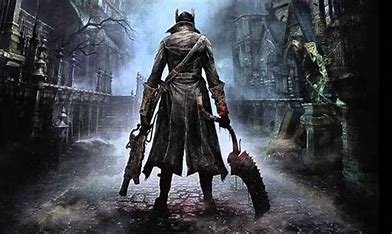
Bloodborne and Dark Souls are two of the most acclaimed and influential video games of the 21st century. Both games are developed by FromSoftware, a Japanese studio led by visionary director Hidetaka Miyazaki. Both games are known for their challenging gameplay, rich lore, atmospheric world design, and cryptic storytelling. But are these games connected in any way, besides sharing a common developer and genre? Is Bloodborne in the Dark Souls universe, or vice versa?
The answer is not simple, as there is no official confirmation or denial from Miyazaki or FromSoftware on this matter. However, there are many hints, references, and theories that suggest a possible link between the two series. In this article, we will explore some of the evidence that supports or refutes the idea that Bloodborne and Dark Souls are related.
Contents
The Case for Connection: Patches, Paintings, and Pygmies
One of the most obvious clues that hint at a connection between Bloodborne and Dark Souls is the presence of a recurring character named Patches. Patches is a deceptive and treacherous NPC who appears in almost every game directed by Miyazaki, starting from Armored Core: For Answer in 2008. He usually tricks the player into falling into a trap or ambush, then either apologizes or mocks them afterwards. He has different names and appearances in each game, but his personality and voice actor remain consistent.
Patches first appeared in the Souls series as Patches the Hyena in Demon’s Souls, then as Trusty Patches in Dark Souls and Dark Souls 3. He also appeared as a spider-like creature called Patches the Spider in Bloodborne, and as a pot-like creature called Lapp in Dark Souls 3: The Ringed City DLC. His latest appearance was in Elden Ring, another game developed by FromSoftware and co-written by Miyazaki and George R.R. Martin.
The fact that Patches appears in both Bloodborne and Dark Souls could imply that they share the same multiverse, or at least that he can travel between different worlds. This is supported by the fact that he mentions Lordran, the setting of Dark Souls, in Bloodborne, when he says “Ahh, Kos… Or some say Kosm… Do you hear our prayers? No, we shall not abandon the dream… No one can catch us… No one can stop us now… Ohh… I know very well how the secrets beckon so sweetly… Only an honest death will cure you now… Liberate you from your wild curiosity… Ohh… You ignorant slaves… Finally taken notice have you? Of the power of my beloved Ocelotte… Child of dragons… Well I will not give him up… For he is all that I have…” This is a clear reference to Oceiros, the Consumed King, a boss in Dark Souls 3 who is obsessed with his dragon child Ocelotte.
Another clue that suggests a connection between Bloodborne and Dark Souls is the concept of paintings. In both series, there are paintings that serve as portals to other worlds. In Dark Souls 1 and 3, there are two Painted Worlds of Ariamis and Ariandel, respectively. These are cold and snowy realms that house outcasts and unwanted beings. In Bloodborne, there is a painting of a woman called Lady Maria in the Hunter’s Nightmare DLC. This painting leads to the Fishing Hamlet, a hidden village where the hunters committed atrocities against the inhabitants.
The paintings in both series have some similarities. They both require blood to enter or create them. They both have connections to fire and rot. They both have inhabitants that worship or fear a great one (a cosmic being). They both have secrets that are hidden from the outside world.
One theory is that the paintings are actually different versions of the same world, or different cycles of the same world. This is based on the idea that both Bloodborne and Dark Souls have cyclical narratives, where history repeats itself with slight variations. In Dark Souls, this is represented by the cycle of fire and dark, where the player can choose to either link or extinguish the First Flame at the end of each game. In Bloodborne, this is represented by the cycle of dreams and nightmares, where the player can choose to either wake up from or continue their hunt at the end of each game.
According to this theory, each painting represents a different cycle of the same world, where different events and outcomes occur. For example, the Painted World of Ariamis could be an earlier cycle of Bloodborne’s world, where Gwyn’s Firstborn was exiled for allying with dragons (similar to Laurence’s betrayal of Byrgenwerth for allying with beasts). The Painted World of Ariandel could be a later cycle of Bloodborne’s world, where the fire fades and the rot spreads (similar to the scourge of the beast and the blood moon). The Fishing Hamlet could be a parallel cycle of Bloodborne’s world, where the hunters are punished for their sins (similar to the Hunter’s Nightmare).
Another theory is that the paintings are actually different dimensions of the same world, or different branches of the same world. This is based on the idea that both Bloodborne and Dark Souls have multiverse narratives, where there are multiple realities that coexist and interact with each other. In Dark Souls, this is represented by the concept of time being convoluted, where the player can summon or invade other players from different worlds. In Bloodborne, this is represented by the concept of insight, where the player can see or access hidden aspects of reality.
According to this theory, each painting represents a different dimension of the same world, where different rules and phenomena apply. For example, the Painted World of Ariamis could be a dimension where fire is dominant and dragons are extinct (similar to Dark Souls’ world). The Painted World of Ariandel could be a dimension where fire is fading and rot is spreading (similar to Dark Souls 3’s world). The Fishing Hamlet could be a dimension where water is dominant and great ones are alive (similar to Bloodborne’s world).
A third clue that hints at a connection between Bloodborne and Dark Souls is the presence of pygmies. Pygmies are small humanoid creatures that are associated with the Dark Soul, the original soul of humanity. They are first mentioned in Dark Souls 1, where Manus, the Father of the Abyss, is said to be a primeval human or pygmy. They are also seen in Dark Souls 3: The Ringed City DLC, where they are revealed to be the original lords of humanity who were given a city by Gwyn as a sign of peace. They are also shown to be the source of the blood of the dark soul, which can be used to create a new painted world.
In Bloodborne, there are also creatures that resemble pygmies. They are called Pthumerians, an ancient race of superhuman beings who lived in underground labyrinths called chalice dungeons. They are said to be the descendants of the ancient ones, or great ones, who granted them blood and knowledge. They are also shown to be the source of blood echoes, which can be used to enhance one’s abilities.
The pygmies and Pthumerians have some similarities. They both have pale skin, dark hair, and red eyes. They both have connections to blood and darkness. They both have secrets that are hidden from the surface world.
One theory is that the pygmies and Pthumerians are actually the same race, or different branches of the same race. This is based on the idea that both Bloodborne and Dark Souls have evolutionary narratives, where there are different stages or forms of life. In Dark Souls, this is represented by the concept of souls, where different beings have different types and amounts of souls. In Bloodborne, this is represented by the concept of blood, where different beings have different types and qualities of blood.
According to this theory, both pygmies and Pthumerians originated from the dark soul, which was split into countless fragments by the Furtive Pygmy at the dawn of time. Some pygmies remained in their original form and lived in isolation in the Ringed City. Others pygmies evolved into humans and spread across the world. Some humans further evolved into gods or giants by acquiring powerful souls from other sources. Some humans devolved into hollows or undead by losing their souls or humanity.
Similarly, some Pthumerians remained in their original form and lived in isolation in the chalice dungeons. Others Pthumerians evolved into kin or great ones by acquiring eldritch knowledge from other sources. Some Pthumerians devolved into beasts or scourge victims by losing their sanity or blood.
The Case Against Connection: Different Themes, Settings, and Styles
While there are many clues that hint at a connection between Bloodborne and Dark Souls, there are also many differences that suggest otherwise. These differences lie in the themes, settings, and styles of each series.
The themes of Bloodborne and Dark Souls are very distinct. Bloodborne is mainly inspired by Gothic horror and cosmic horror genres, while Dark Souls is mainly inspired by high fantasy and dark fantasy genres. Bloodborne explores themes such as madness, disease, transformation, and transcendence. Dark Souls explores themes such as fate, decay, rebirth, and balance.
The settings of Bloodborne and Dark Souls are also very different. Bloodborne is set in a Victorian-era city called Yharnam, which is plagued by a mysterious illness that turns people into beasts. The city is influenced by various cultures and religions, such as Christianity, Judaism, Buddhism, Hinduism, Islam, etc. The city is also connected to other realms called dreams and nightmares
