Protists are a diverse group of eukaryotic organisms that do not fit into any of the other kingdoms of life. They include unicellular and multicellular forms, autotrophs and heterotrophs, parasites and predators. Protists are classified into six major supergroups based on their evolutionary relationships and shared characteristics. One of these supergroups is called Archaeplastida, which contains the red algae, green algae, and land plants. In this article, we will explore which group of protists is most closely related to land plants and how they evolved from a common ancestor.
Contents
The Origin of Archaeplastida
According to the endosymbiotic theory, Archaeplastida are the descendants of an ancient protist that engulfed a cyanobacterium and established a symbiotic relationship with it. The cyanobacterium provided the host cell with photosynthetic ability, while the host cell protected the cyanobacterium from predators and harsh environments. Over time, the cyanobacterium became an organelle called a chloroplast, which is responsible for capturing light energy and converting it into chemical energy. Chloroplasts have their own DNA, ribosomes, and membranes, which are similar to those of cyanobacteria.
Archaeplastida are the only supergroup of protists that have chloroplasts with two membranes, indicating their origin from a single endosymbiotic event. Other groups of protists that have chloroplasts with more than two membranes acquired them from secondary or tertiary endosymbiosis, meaning that they engulfed another protist that already had a chloroplast.
The Diversity of Archaeplastida
Archaeplastida are divided into three main groups: red algae, green algae, and land plants. Red algae are mostly marine organisms that have a red pigment called phycoerythrin in addition to chlorophyll. They can live in deep water where light is scarce because phycoerythrin can absorb blue and green light. Red algae have complex life cycles that involve alternation of generations, meaning that they switch between haploid and diploid stages. Some red algae are multicellular and have a thallus (body) that resembles a plant, while others are unicellular or filamentous.
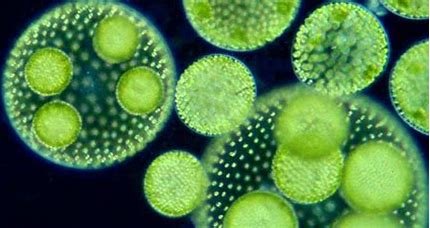
Green algae are mostly freshwater organisms that have chlorophyll a and b as their main pigments. They can also live in terrestrial or marine habitats, where they form symbiotic associations with fungi (lichens), animals (corals), or plants (epiphytes). Green algae have diverse forms and life cycles, ranging from single-celled flagellates to multicellular colonies to complex seaweeds. Green algae are split into two groups: chlorophytes and charophytes. Chlorophytes are more diverse and widespread than charophytes, but charophytes are more closely related to land plants.
Land plants are multicellular organisms that have adapted to live on land by developing features such as cuticles, stomata, vascular tissues, seeds, and flowers. Land plants are also called embryophytes because they protect their developing embryos inside specialized structures called sporangia. Land plants have a life cycle that involves alternation of generations, but unlike most algae, their diploid sporophyte stage is dominant over their haploid gametophyte stage. Land plants are divided into several groups: bryophytes (mosses, liverworts, hornworts), seedless vascular plants (ferns, clubmosses, horsetails), gymnosperms (conifers, cycads, ginkgoes), and angiosperms (flowering plants).
The Relationship Between Charophytes and Land Plants
Among the green algae, charophytes are the most closely related group to land plants. Molecular evidence shows that they share a common ancestor that lived about 475 million years ago. Charophytes and land plants also share some morphological and biochemical features that distinguish them from other green algae. For example:
- Charophytes and land plants have a layer of durable polymer called sporopollenin that prevents their spores or pollen from drying out.
- Charophytes and land plants have a type of cell division called phragmoplast that forms a cell plate between the daughter cells during cytokinesis.
- Charophytes and land plants have a type of enzyme called peroxidase that helps them cope with oxidative stress caused by exposure to air.
- Charophytes and land plants have a type of flagellar protein called tubulin that is similar in structure and function.
- Charophytes and land plants have similar patterns of gene expression during development.
These similarities suggest that charophytes and land plants share some adaptations for living on land, or that they inherited them from their common ancestor. However, charophytes are still aquatic organisms that depend on water for reproduction and dispersal. They do not have the complex structures and functions that land plants have evolved to colonize terrestrial habitats. Therefore, charophytes are not considered to be land plants, but rather their closest living relatives.
Conclusion
Protists are a diverse group of eukaryotic organisms that do not fit into any of the other kingdoms of life. They are classified into six major supergroups based on their evolutionary relationships and shared characteristics. One of these supergroups is called Archaeplastida, which contains the red algae, green algae, and land plants. Among the green algae, charophytes are the most closely related group to land plants. They share a common ancestor that lived about 475 million years ago, as well as some morphological and biochemical features that distinguish them from other green algae. However, charophytes are still aquatic organisms that do not have the complex structures and functions that land plants have evolved to colonize terrestrial habitats. Therefore, charophytes are not considered to be land plants, but rather their closest living relatives.
