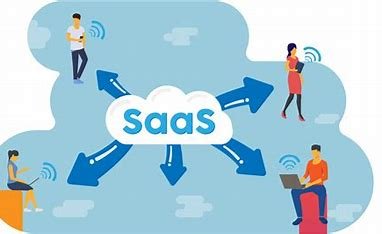
Software as a service (SaaS) is a form of cloud computing that delivers a cloud application—and all its underlying IT infrastructure and platforms—to end users through an internet browser. SaaS is one of the most popular and widely used models of cloud computing, along with infrastructure as a service (IaaS) and platform as a service (PaaS). In this article, we will explore how SaaS works, what are its benefits and challenges, and how it is related to cloud computing.
Contents
What is SaaS?
SaaS is a software distribution model in which services are hosted by a cloud service provider and made available to end-users over the internet. SaaS provides a complete software solution that users can purchase on a pay-as-you-go basis or by subscription. Users do not need to install, update, or maintain any software or hardware on their devices to access SaaS applications. All of the underlying infrastructure, middleware, application software, and data are located in the service provider’s data center. The service provider manages the hardware and software, and ensures the availability and security of the application and the data.
Some common examples of SaaS applications are email, calendaring, office tools, customer relationship management (CRM), enterprise resource planning (ERP), document management, social networking, and e-commerce. Some well-known SaaS providers are Microsoft, Google, Salesforce, Amazon, Oracle, and IBM.
What are the Benefits of SaaS?
SaaS offers many advantages for both users and providers. Some of the benefits of SaaS are:
- Cost-effectiveness: SaaS reduces the upfront cost of software acquisition, installation, and maintenance. Users only pay for what they use or need, and can scale up or down their usage according to their demand. Providers can leverage economies of scale and offer lower prices to users.
- Accessibility: SaaS applications can be accessed from any device that has an internet connection and a web browser. Users can access their data and work from anywhere, anytime, and on any device. Providers can reach a wider audience and offer global services.
- Scalability: SaaS applications can automatically scale up or down according to the level of usage or demand. Users do not need to worry about the capacity or performance of their software or hardware. Providers can optimize their resources and offer high availability and reliability.
- Upgradability: SaaS applications are updated and upgraded by the providers without any intervention from the users. Users always have access to the latest version of the software with new features and functionalities. Providers can deliver faster and more frequent updates and improvements.
- Integration: SaaS applications can easily integrate with other software or services through standard APIs (application programming interfaces). Users can leverage the interoperability and compatibility of different SaaS applications to enhance their productivity and efficiency. Providers can offer more value-added services and solutions to users.
What are the Challenges of SaaS?
SaaS also poses some challenges for both users and providers. Some of the challenges of SaaS are:
- Security: SaaS applications store sensitive data on remote servers that are controlled by the providers. Users have to trust the providers to protect their data from unauthorized access, theft, loss, or corruption. Providers have to comply with various security standards and regulations to ensure the confidentiality, integrity, and availability of their data.
- Privacy: SaaS applications collect personal information from users that may be shared with third parties or used for marketing purposes. Users have to be aware of the privacy policies and terms of service of the providers and how they handle their data. Providers have to respect the privacy rights and preferences of their users and follow ethical practices.
- Dependency: SaaS applications depend on the internet connection and the availability of the providers’ servers. Users may experience downtime or latency if there is a network failure or a server outage. Providers have to ensure high uptime and performance for their services and offer backup and recovery options for their users.
- Customization: SaaS applications offer limited customization options for users who may have specific needs or preferences. Users have to adapt to the features and functionalities of the providers’ software or look for alternative solutions. Providers have to balance between standardization and customization to meet the diverse needs of their users.
How is SaaS Related to Cloud Computing?
SaaS is one of the three main models of cloud computing, along with IaaS and PaaS. Cloud computing is a paradigm that enables on-demand delivery of computing resources over the internet. Cloud computing consists of three layers: infrastructure, platform, and software.
- Infrastructure as a service (IaaS): IaaS provides access to basic computing resources such as servers, storage, network, and virtualization. Users can rent these resources from providers and use them to run their own applications or operating systems. Examples of IaaS providers are Amazon Web Services (AWS), Microsoft Azure, and Google Cloud Platform (GCP).
- Platform as a service (PaaS): PaaS provides access to development tools, database management, business analytics, and other services that enable users to create, deploy, and manage their own applications. Users do not need to manage the underlying infrastructure or software. Examples of PaaS providers are Salesforce Heroku, Google App Engine, and IBM Cloud Foundry.
- Software as a service (SaaS): SaaS provides access to ready-made applications that run on the cloud and are delivered to users over the internet. Users do not need to install, update, or maintain any software or hardware. Examples of SaaS providers are Microsoft Office 365, Google Workspace, and Salesforce CRM.
SaaS is the most widely used and user-friendly model of cloud computing. It allows users to access sophisticated applications at a low cost and with minimal hassle. SaaS is also the most profitable and competitive model for providers who can offer innovative and scalable solutions to users.
Conclusion
SaaS is a software distribution model that delivers cloud-based applications to end-users over the internet. SaaS offers many benefits such as cost-effectiveness, accessibility, scalability, upgradability, and integration. SaaS also poses some challenges such as security, privacy, dependency, and customization. SaaS is one of the three main models of cloud computing, along with IaaS and PaaS. SaaS is the most widely used and user-friendly model of cloud computing that enables users to access sophisticated applications at a low cost and with minimal hassle.
According to Microsoft Azure, Software as a service (SaaS) allows users to connect to and use cloud-based apps over the Internet. Common examples are email, calendaring, and office tools (such as Microsoft Office 365). According to javatpoint, SaaS is also known as “On-Demand Software”. It is a software distribution model in which services are hosted by a cloud service provider. These services are available to end-users over the internet so, the end-users do not need to install any software on their devices to access these services.
