Magma is the term used for the molten or semi-molten rock that exists beneath the Earth’s surface. Magma can have different compositions, temperatures, and water contents, which affect how easily it flows. The resistance to flow of a fluid is called its viscosity. In this article, we will explore how a magma’s viscosity is directly related to its composition and temperature, and how this affects the type and shape of volcanoes that form from magma eruptions.
Composition of Magma
Magma is composed of various minerals that crystallize at different temperatures. The most abundant mineral group in magma is the silicate group, which consists of minerals that have a basic unit of a silicon atom bonded to four oxygen atoms, forming a tetrahedron. These tetrahedra can be arranged in different ways to form different silicate minerals, such as quartz, feldspar, olivine, pyroxene, amphibole, and biotite.
The amount of silica (SiO2) in magma determines its overall composition and viscosity. Silica is the main component of quartz, which is the most abundant mineral in felsic magmas. Felsic magmas have high silica content (more than 65%) and low iron and magnesium content. They are typically light-colored and form rocks such as granite and rhyolite. Felsic magmas have high viscosity because they have many linked silica tetrahedra that make the magma thick and sticky.
On the other hand, mafic magmas have low silica content (less than 52%) and high iron and magnesium content. They are typically dark-colored and form rocks such as basalt and gabbro. Mafic magmas have low viscosity because they have fewer linked silica tetrahedra and more free ions that make the magma fluid and runny.
Intermediate magmas have moderate silica content (52% to 65%) and intermediate iron and magnesium content. They form rocks such as andesite and diorite. Intermediate magmas have intermediate viscosity between felsic and mafic magmas.
Ultramafic magmas have very low silica content (less than 45%) and very high iron and magnesium content. They form rocks such as peridotite and komatiite. Ultramafic magmas are very rare on Earth’s surface because they are usually found deep in the mantle. Ultramafic magmas have very low viscosity because they have almost no linked silica tetrahedra.
Temperature of Magma
The temperature of magma also affects its viscosity. Generally, the higher the temperature, the lower the viscosity, because heat makes the molecules move faster and more freely. The lower the temperature, the higher the viscosity, because cold makes the molecules move slower and more rigidly.
The temperature range of magma varies depending on its composition. Felsic magmas have lower temperatures (650°C to 800°C) than mafic magmas (1000°C to 1200°C), because they crystallize at lower temperatures. Intermediate magmas have intermediate temperatures (800°C to 1000°C) between felsic and mafic magmas.
Effects of Viscosity on Volcanoes
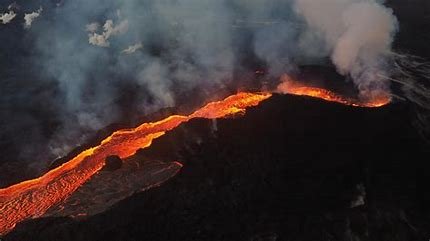
The viscosity of magma affects how it behaves when it reaches the Earth’s surface. Low viscosity magmas can flow easily and rapidly over long distances, forming shield volcanoes or flood basalts. These volcanoes have gentle slopes and broad bases. Low viscosity magmas also tend to produce less explosive eruptions, because gas bubbles can escape easily from the magma.
High viscosity magmas can flow slowly and sluggishly over short distances, forming stratovolcanoes or dome volcanoes. These volcanoes have steep slopes and narrow bases. High viscosity magmas also tend to produce more explosive eruptions, because gas bubbles are trapped in the magma and build up pressure.
Intermediate viscosity magmas can flow moderately over medium distances, forming composite volcanoes or cinder cones. These volcanoes have intermediate slopes and bases. Intermediate viscosity magmas can produce both explosive and effusive eruptions, depending on the amount of gas in the magma.
Conclusion
A magma’s viscosity is directly related to its composition and temperature. The more silica in the magma, the higher the viscosity; the less silica in the magma, the lower the viscosity. The higher the temperature of the magma, the lower the viscosity; the lower the temperature of the magma, the higher the viscosity. The viscosity of magma affects how it flows on Earth’s surface and what type of volcano it forms.
